
 Kontakt
 Jak nakupovat
Doručení
Nákupní rádce
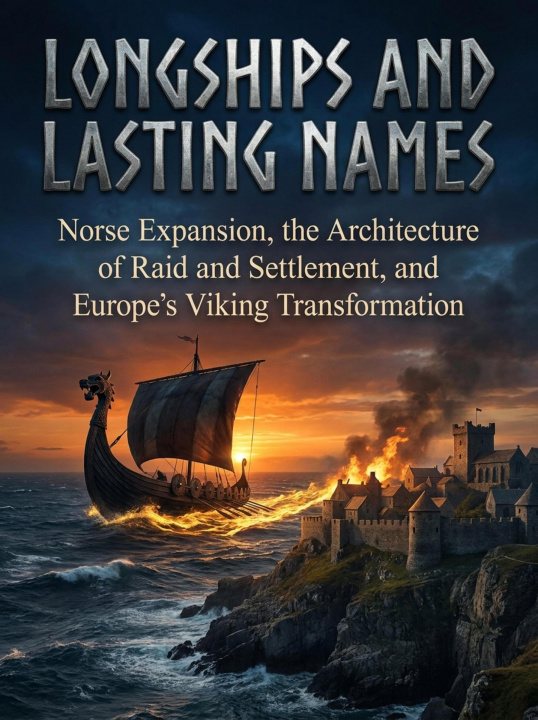
Longships and Lasting Names
Norse Expansion, the Architecture of Raid and Settlement, and Europe's Viking Transformation
 Angličtina
 27 b
27 b
 Nové
Nové

Before the Viking Age reshaped medieval Europe, the longship existed not merely as a vessel but as a theorem - a solution to every geography Europe offered. Its shallow draft allowed it to cross open Atlantic swells and penetrate inland river systems as far as the Russian steppe, reaching Constantinople and Baghdad not by accident but by design. The Norse did not stumble into Europe's monasteries, river valleys, and trading corridors. They engineered their way into them, and the architecture of that engineering tells us more about the Viking world than any saga. The social mechanics behind Norse raiding were not the product of savagery but of structure. The clan economy of Scandinavia operated on redistributive obligation a chieftain's authority depended on his capacity to deliver plunder, silver, and slaves to his followers. Monasteries from Lindisfarne to Nantes were not random targets. They were known repositories of concentrated wealth, poorly defended, and geographically accessible to a vessel that needed no harbor. What followed the slave trade networks running from Ireland to Volga market towns was not a byproduct of raiding culture. It was its most systematically developed institution. The deeper story of the Vikings, however, is neither violence nor engineering. It is assimilation pursued with the same strategic intelligence that built the longship.


Informace o knize
Angličtina
Kategorie

Darujte tuto knihu ještě dnes
Je to snadné
1 Přidejte knihu do košíku a zvolte doručit jako dárek 2 Obratem vám zašleme poukaz 3 Kniha dorazí na adresu obdarovanéhoAhoj! Jsem Libroamiko, tvůj knižní rádce.
Jak ti můžu pomoct?