
 Kontakt
 Jak nakupovat
Doručení
Nákupní rádce
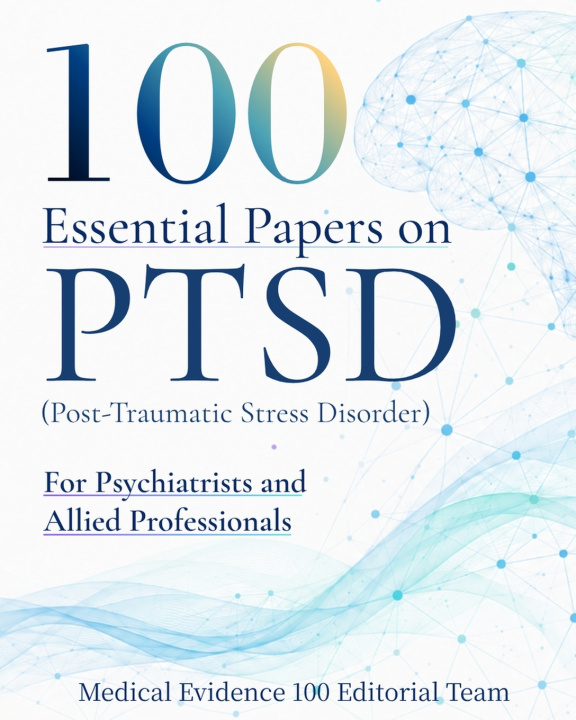
100 Essential Papers on PTSD(Post-Traumatic Stress Disorder)
For Psychiatrists and Allied Professionals
 Angličtina
 47 b
47 b
 Nové
Nové
Až 30 dní na vrácení zboží

100 Essential Papers on Post-Traumatic Stress Disorder (PTSD) Every Psychiatrist and Healthcare Professional Should Know
The word "trauma" is widely recognized, but the clinical reality of post-traumatic stress disorder (PTSD) is far from simple.
Why do some people develop PTSD after similar traumatic experiences while others do not?
Does childhood adversity increase vulnerability later in life, or can it also foster resilience?
How does complex PTSD (CPTSD) differ from conventional PTSD?
And why are psychotherapies such as Prolonged Exposure (PE), Cognitive Processing Therapy (CPT), and Eye Movement Desensitization and Reprocessing (EMDR) effective?
This book brings together and systematically organizes essential papers in PTSD research that psychiatrists, clinical psychologists, healthcare professionals, and everyone involved in trauma care should know.
It covers the major domains of PTSD research, including epidemiology, diagnosis, risk factors, resilience, complex PTSD, neuroimaging, neurobiology, pharmacotherapy, PE, CPT, EMDR, prevention, and trauma related to disasters, war, sexual violence, and childhood adversity.
Each paper is discussed from two key perspectives:
"How did this study change our understanding of PTSD?"
"How does it inform current clinical practice and trauma support?"
Understanding PTSD requires moving beyond simple either-or explanations. Findings can vary substantially depending on the type of trauma, whether exposure is repeated or prolonged, the developmental stage at which it occurs, the availability of social support, individual differences, diagnostic systems, and study design.
By presenting studies that may at first appear to contradict one another, this book is designed to help readers see the broader structure underlying the complexity of PTSD itself.
Major Topics CoveredThe global prevalence of PTSD and disparities in access to treatment
Differences between PTSD concepts in the DSM and ICD
Complex PTSD (CPTSD)
Childhood adversity and the future risk of PTSD
Resilience and stress inoculation
Neuroimaging studies focusing on the hippocampus, amygdala, and prefrontal cortex
Biological research involving genetics, neuroendocrine systems, and inflammation
Prolonged Exposure (PE) therapy
Cognitive Processing Therapy (CPT)
Eye Movement Desensitization and Reprocessing (EMDR)
Pharmacotherapy
PTSD following disasters, war, sexual violence, and abuse
Chronicity, remission, and long-term outcomes
Current controversies and unresolved questions in PTSD research
This book is recommended for psychiatrists, psychosomatic medicine physicians, clinical psychologists, licensed psychologists, nurses, residents, and trauma-care professionals-as well as anyone who wants to develop a deeper, evidence-based understanding of PTSD.


Informace o knize
Angličtina

Darujte tuto knihu ještě dnes
Je to snadné
1 Přidejte knihu do košíku a zvolte doručit jako dárek 2 Obratem vám zašleme poukaz 3 Kniha dorazí na adresu obdarovanéhoAhoj! Jsem Libroamiko, tvůj knižní rádce.
Jak ti můžu pomoct?