
 Kontakt
 Jak nakupovat
Doručení
Nákupní rádce
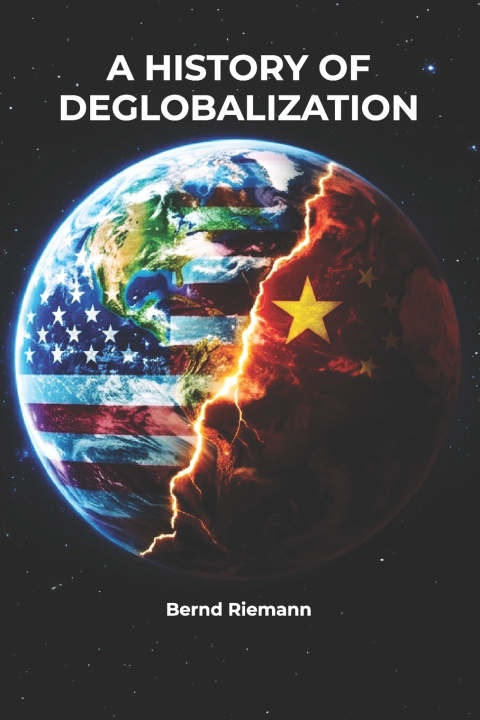
A History of Deglobalization
 Angličtina
 34 b
34 b
 Nové
Nové
Až 30 dní na vrácení zboží

For over three decades, global leaders assumed globalization was the inevitable destination of modern history. Lower trade barriers, planetary supply chains, free capital, and digital networks fueled a simple, prevailing belief: the world was becoming an integrated, efficient, and indivisible system.
A History of Deglobalization challenges that assumption.
This book argues that the hyper-globalization of the 1990s and 2000s was a brief, exceptional anomaly rather than the historical norm. As its unique conditions vanished, the global economy shifted into a new era of fragmentation, strategic competition, and industrial rivalry.
Beginning with the foundations of the postwar order at Bretton Woods, the book traces the architecture that enabled international integration after 1945. It examines the Cold War's divided economic systems, the revolutionary impact of containerized shipping, the rise of multinational production networks, and the digital technologies that made global supply chains possible. From there, it follows the dramatic expansion of globalization after the collapse of the Soviet Union, exploring the triumph of the post-Cold War consensus, China's accession to the World Trade Organization, the shareholder revolution, and the unprecedented integration of markets, capital, and production.
As the narrative moves into the twenty-first century, the cracks become visible. Economic nationalism returns. Sovereign wealth funds reshape investment flows. Energy shocks expose vulnerabilities. Financial crises reveal systemic fragility. Political backlash grows across advanced economies. Migration patterns change. Offshore financial networks expand. Strategic dependencies become tools of statecraft. What once appeared to be a self-reinforcing system increasingly reveals itself as a structure vulnerable to geopolitical conflict and economic disruption.
The book then examines the transformative events that accelerated deglobalization: the pandemic, supply-chain breakdowns, industrial policy revival, geopolitical realignment, food and fertilizer crises, climate-linked trade restrictions, semiconductor competition, energy security concerns, sanctions regimes, and the emergence of competing technological ecosystems. These developments are presented not as isolated events, but as interconnected forces reshaping the global order.
Particular attention is given to the rise of the "Electric Stack"-the strategic competition surrounding semiconductors, batteries, critical minerals, electricity infrastructure, artificial intelligence, and advanced manufacturing. Alongside this transformation, the work explores the return of state intervention, the weaponization of finance, debates over dedollarization, the resurgence of tariffs, and the growing importance of resource-rich states in an increasingly fragmented world economy.
The author presents deglobalization as a lasting historical process rather than a temporary disruption. Through detailed analysis, it explains why governments, corporations, and citizens now balance efficiency against resilience, security, sovereignty, and strategic autonomy.
The book concludes by exploring two possible futures: a world of managed divergence, in which competing blocs coexist within a modified international system, and a world of cascading fragmentation, where trust, trade, and institutional cooperation continue to erode. Both scenarios raise fundamental questions about growth, stability, technology, and power in the decades ahead.
This highly accessible, deeply researched book connects 80 years of major economic and geopolitical developments into a single coherent narrative. It is essential reading for understanding the future of capitalism, globalization, and the evolving competition between the US and China.
The age of globalization transformed the world. This book explains why that age is ending-and what comes next.


Informace o knize
Angličtina

Darujte tuto knihu ještě dnes
Je to snadné
1 Přidejte knihu do košíku a zvolte doručit jako dárek 2 Obratem vám zašleme poukaz 3 Kniha dorazí na adresu obdarovanéhoAhoj! Jsem Libroamiko, tvůj knižní rádce.
Jak ti můžu pomoct?