
 Kontakt
 Jak nakupovat
Doručení
Nákupní rádce
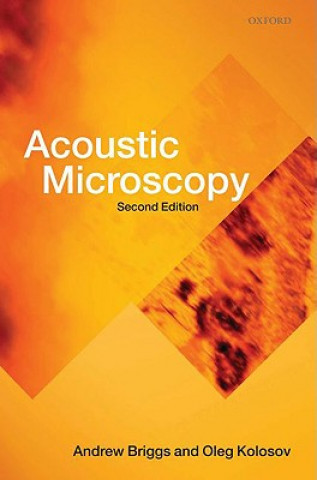
Acoustic Microscopy
 Angličtina
 446 b
446 b
Až 30 dní na vrácení zboží
Zákazníci také koupili

 /
/
 Brožovaná
 445
Kč
445
Kč






 /
Brožovaná
863
Kč
/
Brožovaná
863
Kč








Acoustic microscopy enables the elastic properties of materials to be imaged and measured with the resolution of a good microscope. By using frequencies in the microwave regime, it is possible to make the acoustic wavelength comparable with the wavelength of light, and hence to achieve a resolution comparable with an optical microscope. Solids can support both longitudinal and transverse acoustic waves. At surfaces a unique combination of the two known as Raleigh waves can propagate, and in many circumstances these dominate the contrast in acoustic microscopy. Following the invention of scanning probe microscopes, it is now possible to use an atomic force microscope to detect the acoustic vibration of a surface with resolution in the nanometre range, thus beating the diffraction limit by operating in the extreme near-field. This second edition of Acoustic Microscopy has a major new chapter on the technique and applications of acoustically excited probe microscopy.


Informace o knize
Angličtina

Darujte tuto knihu ještě dnes
Je to snadné
1 Přidejte knihu do košíku a zvolte doručit jako dárek 2 Obratem vám zašleme poukaz 3 Kniha dorazí na adresu obdarovanéhoMohlo by vás také zajímat





















 /
Brožovaná
380
Kč
/
Brožovaná
380
Kč



Ahoj! Jsem Libroamiko, tvůj knižní rádce.
Jak ti můžu pomoct?