
 Kontakt
 Jak nakupovat
Doručení
Nákupní rádce
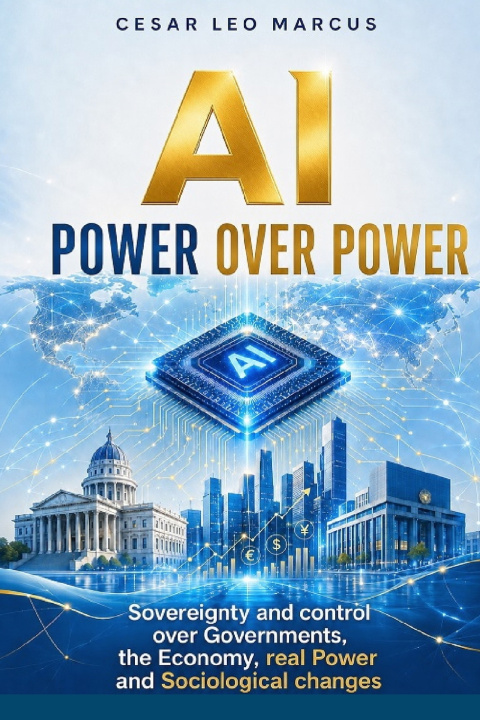
AI - Power over Power
Sovereignty and control over Governments, the Economy, and Real Power.
 Angličtina
 44 b
44 b
 Nové
Nové
Až 30 dní na vrácení zboží

Who controls those who control algorithms?
What sovereignty does a person retain when another system knows their desires before they can express them?
What authority does a government possess when it depends on private infrastructure?
Where does assistance end and obedience begin?
For centuries, the face of power was recognizable. It could be found in palaces, armies, banks, churches, parliaments, universities, and major media organizations. It could be challenged, confronted, or replaced because, even when it remained hidden, the institutions that exercised it could still be identified.
In the twenty-first century, however, a different form of authority emerged: silent and capable of moving through all the structures that came before it.
Power over Power does more than describe a technological revolution. It examines a transformation in the sovereignty of individuals, businesses, and governments. Intelligent systems no longer merely answer questions. They interpret documents and recommend investments.
They design campaigns, monitor borders, guide diagnoses, select news, organize industrial processes, and participate in decisions that affect everyday life. Their influence grows precisely because they become embedded in seemingly ordinary activities, without requiring ceremonies, elections, or public declarations.
But technological power belongs not only to whoever possesses the most advanced model. It also belongs to whoever controls the data, energy, semiconductors, processing centers, and rules of access.
A nation may not necessarily lose its symbols or its formal sovereignty, yet foreign systems may come to manage its economy or interpret its reality.
This book examines that shift without surrendering to fascination. Artificial intelligence is neither a divinity nor a demon. It is an infrastructure built by human beings, financed by capital, and directed toward defined objectives. Nevertheless, its ability to multiply knowledge and reduce costs gives it an influence greater than that of many traditional institutions.
The problem is not that machines may wish to govern us, but that certain groups may govern through them without revealing themselves. The question is unavoidable: What happens when the power to decide becomes separated from the responsibility to answer those decisions?
A government must answer to its citizens, and a company to its shareholders. An algorithm, by contrast, is presented as a technical, neutral, and inevitable conclusion. This makes it possible to conceal human decisions behind calculations that few people understand. When someone says, "the system decided," the abandonment of responsibility begins.
Artificial intelligence promises abundance: more goods, better services, new discoveries, and personalized solutions. It can reduce medical, energy, educational, and industrial costs. Yet extraordinary productivity does not guarantee a society that is more just or freer.
If the benefits become concentrated while dependence becomes widespread, technological abundance could coexist with profound political fragility. The future will depend not only on how many machines produce, but also on who owns that production and how its advantages are distributed.
Power has always sought to control the instruments that organize society. The difference is that the instrument can now analyze, anticipate, and act. Artificial intelligence therefore represents power over power: a capacity that does not necessarily replace leaders, business owners, or institutions, but does alter their possibilities and shape their decisions.
This book does not claim to offer definitive answers about a technology that is changing even as we try to describe it.


Informace o knize
Angličtina
