
 Kontakt
 Jak nakupovat
Doručení
Nákupní rádce
ANESTHESIA IN HIGH-RISK PATIENTS
An Evidence-Based Framework for Perioperative Assessment, Optimization, and Management Across Cardiac, Pulmonary, Renal, Endocrine, & Critically Ill Surgical Patients
 Angličtina
 393 b
393 b
 Připravujeme
 Nové
Nové
Až 30 dní na vrácení zboží

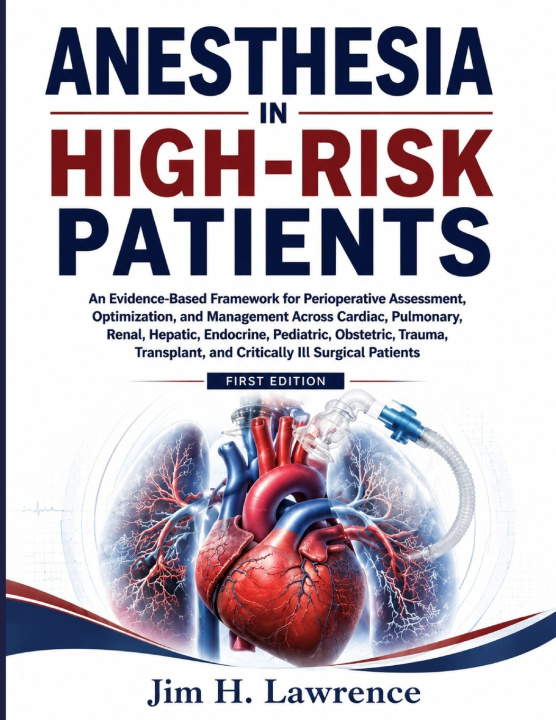
ANESTHESIA IN HIGH-RISK PATIENTS
An Evidence-Based Framework for Perioperative Assessment, Optimization, and Management Across Cardiac, Pulmonary, Renal, Hepatic, Endocrine, Pediatric, Obstetric, Trauma, Transplant, and Critically Ill Surgical Patients
ANESTHESIA IN HIGH-RISK PATIENTS is a comprehensive, clinically focused reference designed to provide a systematic understanding of the assessment, optimization, and management of patients undergoing surgery with significant medical complexity and elevated perioperative risk.
The book integrates the principles of perioperative medicine, anesthetic pharmacology, physiology, risk stratification, advanced monitoring, and critical care to provide an evidence-based framework for managing vulnerable surgical populations.
Key topics include:- Identification and assessment of high-risk surgical patients using clinical evaluation, scoring systems, biomarkers, and functional assessment
- Perioperative optimization, prehabilitation, shared decision-making, and multidisciplinary care models
- Cardiovascular anesthesia including ischemic heart disease, heart failure, valvular disease, arrhythmias, pulmonary hypertension, and perioperative hemodynamic management
- Pulmonary anesthesia including COPD, asthma, obstructive sleep apnea, restrictive lung disease, one-lung ventilation, and prevention of postoperative pulmonary complications
- Renal anesthesia including chronic kidney disease, acute kidney injury prevention, dialysis patients, fluid management, electrolyte disorders, and renal transplantation
- Hepatic anesthesia including cirrhosis, liver failure, coagulopathy, portal hypertension, drug metabolism alterations, and liver transplantation
- Endocrine disorders including diabetes, thyroid disease, adrenal insufficiency, pheochromocytoma, pituitary disorders, and metabolic complications
- Obesity and metabolic syndrome, including airway challenges, respiratory physiology, drug dosing considerations, and bariatric surgery anesthesia
- Geriatric anesthesia, frailty assessment, polypharmacy, cognitive dysfunction, delirium prevention, and goals-of-care discussions
- Pediatric high-risk anesthesia including neonatal physiology, congenital heart disease, difficult airway management, trauma, and malignant hyperthermia
- Obstetric anesthesia including preeclampsia, obstetric hemorrhage, cardiac disease in pregnancy, placenta accreta spectrum, and high-risk parturients
- Neurological and neuromuscular disorders including stroke, traumatic brain injury, myasthenia gravis, epilepsy, spinal cord injury, and movement disorders
- Hematologic disorders, transfusion strategies, coagulation abnormalities, thrombosis prevention, and point-of-care coagulation testing
- Trauma anesthesia including damage-control resuscitation, massive transfusion protocols, hemorrhagic shock, burns, and emergency airway management
- Cardiac surgery anesthesia including cardiopulmonary bypass, valve surgery, aortic procedures, mechanical circulatory support, and fast-track cardiac anesthesia
- Vascular surgery anesthesia, transplant anesthesia, and management of complex surgical patients
- Anesthesia for sepsis, critical illness, septic shock, and intensive care transitions
- Difficult airway management, awake intubation techniques, video laryngoscopy, extubation strategies, and advanced airway planning
- Advanced monitoring technologies, point-of-care ultrasound, artificial intelligence, predictive analytics, and future innovations in perioperative care
- Postoperative complications, enhanced recovery pathways, persistent postsurgical pain, palliative care, and quality improvement


Informace o knize
Angličtina

Darujte tuto knihu ještě dnes
Je to snadné
1 Přidejte knihu do košíku a zvolte doručit jako dárek 2 Obratem vám zašleme poukaz 3 Kniha dorazí na adresu obdarovanéhoAhoj! Jsem Libroamiko, tvůj knižní rádce.
Jak ti můžu pomoct?