
 Kontakt
 Jak nakupovat
Doručení
Nákupní rádce
 Angličtina
 55 b
55 b
30 dní na vrácení zboží

Cybersecurity does not fail first at the firewall.
It fails first at the word.
Across organizations, teams routinely use the same terms-risk, incident, threat, vulnerability, detection-to mean different things. These inconsistencies fracture evidence, undermine automation, distort metrics, and create exploitable gaps that adversaries understand better than defenders do.
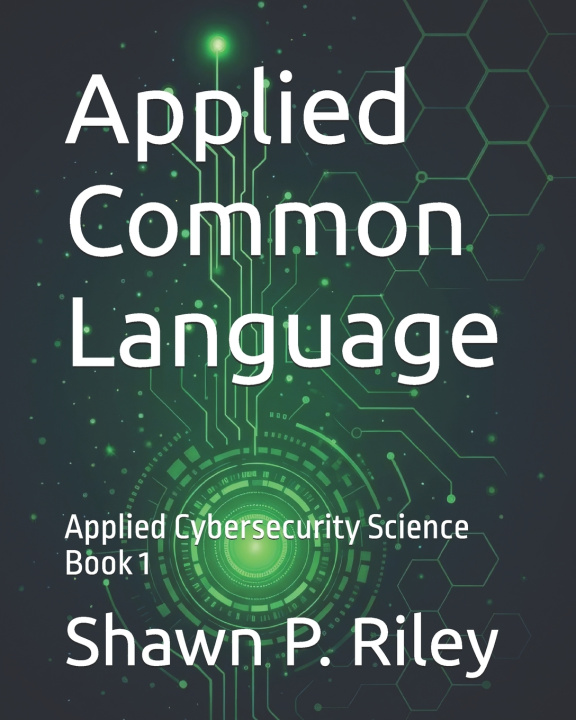
Applied Common Language is the first operational volume in the Applied Cybersecurity Science series. It transforms Common Language from a conceptual ideal into a measurable, enforceable, adversary-aware capability.
This book is not about terminology hygiene.
It is about scientific control of meaning.
Built on the Seven Core Themes and Eight Core Principles of Cybersecurity Science, this volume provides the architecture, logic, and workflows required to:
Establish precise, role-independent definitions that survive automation, scale, and adversarial pressure
Eliminate semantic drift between SOCs, IR teams, leadership, tooling, and reporting
Bind language directly to evidence, metrics, and decision logic
Enable reliable measurement, reproducibility, and falsifiability across cybersecurity functions
Create the semantic foundation required for mature risk reasoning, attack analysis, and AI-assisted operations
Where the Introductory Cybersecurity Science series explained why common language is a scientific necessity, Applied Common Language shows how to build it-step by step, with operational rigor.
This book delivers:
A scientific model for cybersecurity language as a system
Boundary definitions that prevent ambiguity from re-entering operations
Design patterns for terminology governance across tools and teams
Metrics that detect semantic breakdown before it becomes operational failure
Maturity diagnostics aligned to the Cybersecurity Science Maturity Model (CS²M²)
Cybersecurity cannot be measured if it cannot be described precisely.
It cannot be automated if meaning is unstable.
And it cannot be scientific without a shared, enforceable language.
This volume establishes that foundation.


Informace o knize
Angličtina
