
 Kontakt
 Jak nakupovat
Doručení
Nákupní rádce
 Angličtina
 241 b
241 b
30 dní na vrácení zboží
Zákazníci také koupili
















 /
/
 Brožovaná
 1 076
Kč
1 076
Kč

 /
Brožovaná
369
Kč
/
Brožovaná
369
Kč


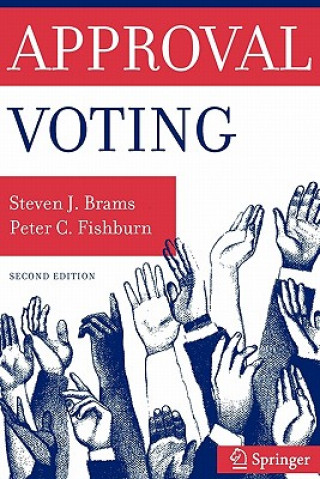
Approval Voting proposes a compelling way to elect some 500,000 officials in public elections. Under this system voters may vote for, or approve of, as many candidates as they like in multicandidate elections. Among the many benefits of approval voting are its propensity to elect the majority candidate (rather than the strongest minority candidate, as often occurs under plurality voting), its relative invulnerability to insincere or strategic voting, and by offering voters the opportunity to influence election outcomes more equitably a probable increase in voter turnout. Since the publication of the first edition of this book, its arguments in favor of an election reform practically unknown in 1983 have stood the test of time. Perhaps the proof of the pudding lies in the adoption of approval voting by about a dozen professional societies several with tens of thousands of members and their generally favorable experience with it. After a generation of discussion and debate on the subject, the authors remain convinced that Approval Voting is as relevant today as it was when rigorous analysis and systematic empirical research on this election reform began more than 30 years ago."Approval Voting" proposes a compelling way to elect some 500,000 officials in public elections. Under this system voters may vote for, or approve of, as many candidates as they like in multicandidate elections. Among the many benefits of approval voting are its propensity to elect the majority candidate (rather than the strongest minority candidate, as often occurs under plurality voting), its relative invulnerability to insincere or strategic voting, and - by offering voters the opportunity to influence election outcomes more equitably - a probable increase in voter turnout.§Since the publication of the first edition of this book, its arguments in favor of an election reform practically unknown in 1983 have stood the test of time. Perhaps the proof of the pudding lies in the adoption of approval voting by about a dozen professional societies - several with tens of thousands of members - and their generally favorable experience with it. After a generation of discussion and debate on the subject, the authors remain convinced that "Approval Voting" is as relevant today as it was when rigorous analysis and systematic empirical research on this election reform began more than 30 years ago.


Informace o knize
Angličtina

Darujte tuto knihu ještě dnes
Je to snadné
1 Přidejte knihu do košíku a zvolte doručit jako dárek 2 Obratem vám zašleme poukaz 3 Kniha dorazí na adresu obdarovanéhoMohlo by vás také zajímat







 /
Brožovaná
180
Kč
/
Brožovaná
180
Kč
















 /
/
 Audio CD
1 597
Kč
Audio CD
1 597
Kč
Ahoj! Jsem Libroamiko, tvůj knižní rádce.
Jak ti můžu pomoct?