
 Kontakt
 Jak nakupovat
Doručení
Nákupní rádce
 Angličtina
 28 b
28 b
 Připravujeme
 Nové
Nové
Až 30 dní na vrácení zboží

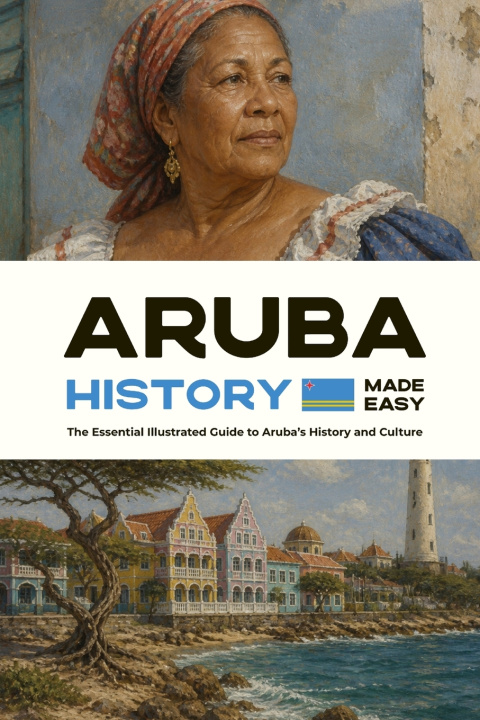
A sunlit island can hide a history shaped by canoes, slavery, oil, and a language born in contact. The journey begins with early crossings from the South American mainland and reaches the creation of the modern Country of Aruba in 1986. Along the way, Caquetío villages, Papiamento, Spanish and Dutch rule, gold and phosphate, San Nicolas, refineries, tourism, and conservation reveal an island that was never isolated from the Caribbean world.
Did You Know?
- Did you know early canoe travelers crossed from the South American mainland long before hotels and cruise ships?
- Did you know Aruba's dry climate helped limit plantation agriculture, but never ended slavery?
- Did you know Papiamento grew from African, Indigenous, Iberian, Dutch, and migrant experience?
- Did you know the island's gold, phosphate, aloe, oil, and tourism booms each changed the landscape?
- Did you know San Nicolas became a major industrial and migrant city around oil?
- Did you know Arikok protects a landscape shaped by both geology and human use?
What This Book Includes
- A chronological arc from Archaic-age settlement to the present.
- Caquetío communities and Papiamento placed within their Caribbean connections.
- Language and power examined through Papiamento, slavery, migration, and social inequality.
- Black-and-white artistic reconstructions that open a visual window onto each period.


Informace o knize
Angličtina

Darujte tuto knihu ještě dnes
Je to snadné
1 Přidejte knihu do košíku a zvolte doručit jako dárek 2 Obratem vám zašleme poukaz 3 Kniha dorazí na adresu obdarovanéhoAhoj! Jsem Libroamiko, tvůj knižní rádce.
Jak ti můžu pomoct?