
 Kontakt
 Jak nakupovat
Doručení
Nákupní rádce
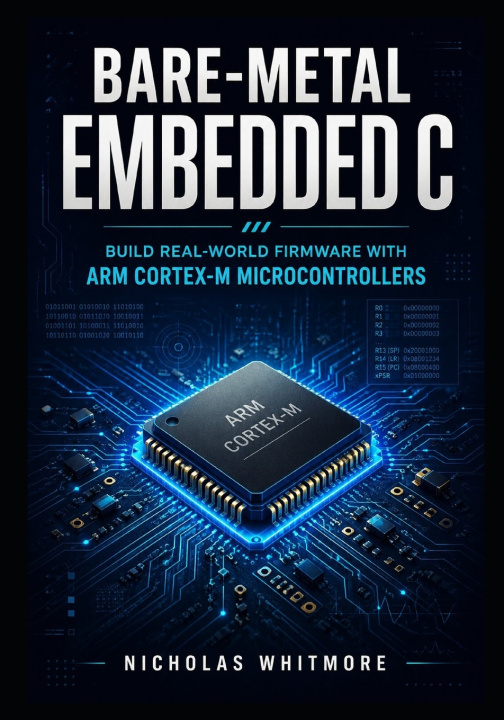
Bare-Metal Embedded C
Build Real-World Firmware with ARM Cortex-M Microcontrollers
 Angličtina
 46 b
46 b
 Top
Top
 Nové
Nové
Až 30 dní na vrácení zboží
Zákazníci také koupili








STOP GUESSING WHY YOUR FIRMWARE WORKS. START KNOWING.
Every embedded engineer hits the same wall eventually: the HAL call that "just works" until it doesn't, the interrupt that fires at the wrong priority, the delay loop that behaves differently the moment you flip on compiler optimization. Vendor libraries are convenient right up until something breaks underneath them, and then you're stuck debugging a black box instead of your own code.
Bare-Metal Embedded C strips that black box away. This is a hands-on, register-level guide to programming ARM Cortex-M microcontrollers with nothing between your code and the silicon - no operating system, no bloated abstraction layer, no mystery. Just C, the datasheet, and complete control over the hardware.
WHAT YOU'LL ACTUALLY BUILD
Starting from an empty project directory, you'll construct a complete firmware image from scratch - startup code, vector table, linker script, and all - before moving into real, working peripheral drivers:
- GPIO control with proper debounced button input
- Clock configuration, SysTick, and hardware timers with true microsecond accuracy
- Interrupt-driven design using the NVIC, done the way production firmware actually does it
- UART communication, including a full serial debug console you'll use for the rest of the book
- SPI and I2C drivers wired up to real sensor hardware
- ADC sampling and PWM generation for motor control and LED dimming
- GDB and OpenOCD debugging techniques for diagnosing the bugs that only show up on real hardware
- A complete, multi-peripheral sensor monitoring application that ties every driver together into one properly architected codebase
Every example is a complete, compilable listing, not a fragment you're left to guess around. Every register access is explained at the bit level, so you understand exactly why the code is written the way it is, not just that it works.
WHO THIS BOOK IS FOR
- Electronics hobbyists ready to graduate from Arduino and see what's actually happening under those convenience functions
- Computer science grads and self-taught developers whose C skills are solid but have never touched real hardware
- Working software engineers moving into embedded roles who need to get productive fast
- Firmware engineers who've only ever used vendor HAL libraries and want to finally understand what's underneath them
- Students who want a textbook that treats them like capable adults, not a slideshow with code screenshots
You should already be comfortable with C - pointers, structs, functions. You don't need any prior embedded experience. Everything else, this book builds from the ground up.
WHY IT'S DIFFERENT
This isn't a reference manual dump or a copy-paste tutorial series. It's written the way a senior firmware engineer would actually explain things to someone they were mentoring - theory first, then real code, then a clear breakdown of why every design decision was made, including the mistakes that trip people up in production: missing volatile qualifiers, uncleared interrupt flags, race conditions between ISRs and the main loop, stack overflows that silently corrupt unrelated memory.
By the last page, you won't just have blinked an LED. You'll have built a complete, interrupt-driven, multi-peripheral firmware application using the same architecture patterns professional teams use in production - and you'll be able to read any Cortex-M datasheet from any vendor and know exactly what to do with it.
Scroll up and grab your copy. Your microcontroller has been waiting.


Informace o knize
Angličtina

Darujte tuto knihu ještě dnes
Je to snadné
1 Přidejte knihu do košíku a zvolte doručit jako dárek 2 Obratem vám zašleme poukaz 3 Kniha dorazí na adresu obdarovanéhoMohlo by vás také zajímat

Ahoj! Jsem Libroamiko, tvůj knižní rádce.
Jak ti můžu pomoct?