
 Kontakt
 Jak nakupovat
Doručení
Nákupní rádce
 Angličtina
 48 b
48 b
30 dní na vrácení zboží

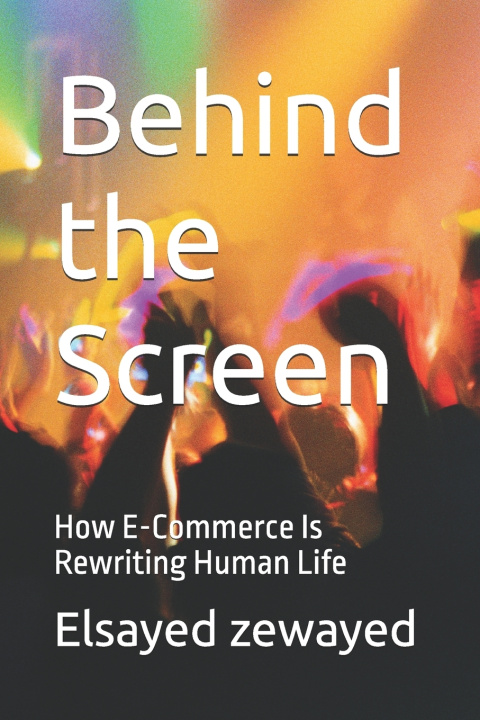
This book was born from a simple, stubborn feeling: something big is happening to our lives, and we are pretending it is only about "shopping online."
We talk about e-commerce as if it were a small chapter in the story of technology just another step after credit cards and supermarkets. We say things like, "Life is easier now," "Everything is on the phone," "You can order anything." All of that is true, but none of it is enough.
Behind every order, every tap, every glowing notification, a larger transformation is quietly unfolding.
The way we move in our cities is changing. The way we meet each other is changing. The way governments see us and manage us is changing. The way companies think about us as customers, as profiles, as data points is changing. The way money works is changing. The way we work, rest, feel lonely, feel connected, feel watched, feel free each of these is being rewritten, bit by bit, under the soft light of the screen.
And yet, most of the time, we describe it in the smallest possible terms:
"It's just online shopping."
"It's just an app."
"It's just convenient."
This book refuses that "just."
It is an attempt to look at digital commerce not as a narrow topic about business, but as a doorway into many dimensions of our world: security, society, economy, environment, politics, advertising, finance, psychology, and, at the deepest level, what it means to be human in a measured, connected, and increasingly optimised age.
You will not find technical manuals here, nor instructions on how to "get rich online" or "hack the algorithm." This is not a business book in the usual sense. It is closer to a long walk with a thoughtful friend through a city that is changing faster than anyone admits. Sometimes we will walk through quiet streets sometimes through crowded squares sometimes through invisible corridors made of code and policy and habit.
The language of this book is intentionally simple and human. It is written for people between twenty and fifty-five, but it does not assume any specific profession, culture, or background. Whether you are an engineer or a teacher, a marketer or a nurse, a student, a shop owner, a freelancer, or an employee, you are already living inside the world this book describes. You do not need to be an expert in economics or technology to recognise its patterns you only need your own experience and a willingness to look at it with fresh eyes.
The chapters are not meant to frighten you or to comfort you. They are meant to sharpen your perception.
We will look at how states quietly benefit when people move less and click more, and how reducing physical friction can reduce crime but also reduce community. We will explore how cities become "quieter" while people inside them become more isolated. We will see how e-commerce helps governments save fuel and time, even as it concentrates power in a small number of platforms and infrastructures. We will question the idea that digital trade automatically "helps the planet," and ask what really happens to emissions, waste, and air quality in this new model.
We will talk about politics not the daily noise of parties and slogans, but the deeper logic of governing through data: how behaviour can be guided indirectly, how cashless systems change the balance between citizen and state, how the fear of losing access can be as powerful as the fear of punishment.
We will look at advertising in a new way: not as colourful decoration on the side of life, but as a core engine of the digital economy where human attention itself becomes merchandise. We will follow the path from simple card payments to digital currencies and ask what it means to live in a world where money is increasingly programmable, traceable, and sometimes centralised or decentralised by design.
We will also stay close to the human heart of it all.


Informace o knize
Angličtina
