
 Kontakt
 Jak nakupovat
Doručení
Nákupní rádce
 Angličtina
 64 b
64 b
 Nové
Nové
Až 30 dní na vrácení zboží

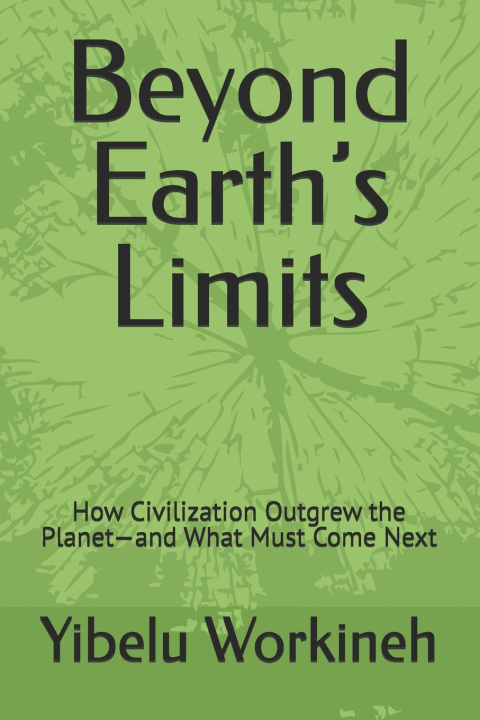
Humanity has reached a turning point. For centuries, civilizations thrived by drawing upon the Earth's abundance, believing its resources to be infinite. But today, the evidence is undeniable: we have outgrown the planet that sustains us. Beyond Earth's Limits is both a diagnosis and a prescription-a sweeping narrative that blends science, philosophy, and human stories to reveal the consequences of ecological overshoot and the urgent pathways toward renewal.
At the heart of the book lies the planetary boundary framework, a scientific model that defines the safe operating space for humanity. Nine critical Earth systems-climate, biodiversity, freshwater, land use, ocean chemistry, and more-are now under strain, with several already breached. The Holocene's stability, which nurtured agriculture and civilization, has given way to the Anthropocene, an era marked by destabilization and risk. Overshoot is no longer theoretical; it is lived reality, manifesting in parched soils, collapsing fisheries, vanishing forests, and displaced communities.
Through vivid storytelling, Yibelu Workineh brings this crisis to life. We meet Anna, a farmer in Spain whose olive groves wither under relentless drought; Kwame, an innovator in Ghana struggling to advance renewable energy against systemic barriers; Mei, watching ancestral shores in China disappear beneath rising seas; and Carlos, forced to migrate across Central America after climate-driven crop failures. These narratives transform abstract science into human experience, showing how overshoot reshapes identities, cultures, and destinies.
Yet the book is not a tale of despair. It is a roadmap for resilience. Workineh dismantles the myth that growth equals progress, arguing instead for economies built on circularity, regeneration, and sufficiency. He explores renewable energy transitions, regenerative agriculture, and biodiversity restoration as pillars of a new civilization. Innovation is embraced, but with restraint-technology must serve ecological balance rather than accelerate depletion. The book insists that solidarity is essential: no nation or community can solve planetary overshoot alone. Global cooperation, fairness, and shared responsibility are strategic necessities.
Time emerges as the most urgent dimension. Environmental damage carries inertia; today's actions reverberate for decades. The book warns that delay is the greatest threat, but also highlights emerging movements, policies, and grassroots initiatives that prove transformation is possible. Optimism here is not naïve-it is grounded in courage, creativity, and the recognition that humanity's collective will can forge a new path.
Philosophically, Beyond Earth's Limits challenges modernity's narratives of conquest and accumulation. It calls for a cultural shift where well-being is defined not by endless consumption but by connection, stewardship, and sufficiency. Drawing on indigenous wisdom, ecological science, and ethical traditions, Workineh invites readers to reimagine prosperity in human terms rather than material ones.
Ultimately, this book is a wake-up call and a vision. It is a meditation on limits, a critique of growth, and a celebration of resilience. It urges policymakers, activists, scholars, and citizens to act-not tomorrow, but today. To live beyond Earth's limits is to recognize both the fragility and beauty of our shared existence, and to embrace the possibility of a civilization that thrives within boundaries rather than collapsing under excess.


Informace o knize
Angličtina
Kategorie

Darujte tuto knihu ještě dnes
Je to snadné
1 Přidejte knihu do košíku a zvolte doručit jako dárek 2 Obratem vám zašleme poukaz 3 Kniha dorazí na adresu obdarovanéhoAhoj! Jsem Libroamiko, tvůj knižní rádce.
Jak ti můžu pomoct?