
 Kontakt
 Jak nakupovat
Doručení
Nákupní rádce
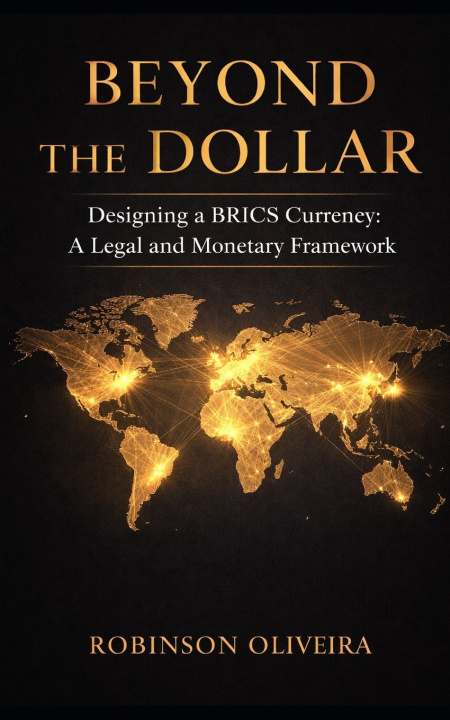
Beyond The Dollar
Designing a BRICS Currency: A Legal and Monetary Framework
 Angličtina
 55 b
55 b
 Nové
Nové
Až 30 dní na vrácení zboží

The dollar's reign is not inevitable. It is a legal and institutional construction-and constructions can be redesigned.
In Beyond the Dollar, Robinson Oliveira-a practicing attorney, international legal advisor, and Auditor at the Central Bank of Brazil-delivers the first comprehensive legal and monetary blueprint for a BRICS reserve currency. This is not geopolitical speculation. It is a rigorous, actionable framework grounded in treaty law, institutional design, and the hard realities of international monetary systems.
Why this book matters now
BRICS economies represent over 35% of global GDP by purchasing power parity-yet they remain structurally dependent on a monetary architecture designed in 1944. Every dollar-denominated transaction routes through U.S. infrastructure, exposing non-American parties to American sanctions law, regulatory reach, and monetary policy decisions they had no voice in making. That is not an accident. It is a system. This book explains exactly how it works, why it persists, and what a credible alternative requires.
What you will find inside
Drawing on international monetary law, the institutional histories of the IMF and the ECB, and the legal frameworks governing supranational institutions, Beyond the Dollar constructs a complete architectural proposal across five interdependent pillars:
A treaty-based legal foundation - the BRICS Monetary Cooperation Treaty, with a supranational issuing authority, a specialized monetary tribunal, and binding obligations enforceable under international law.
A reserve allocation system - tiered minimum holding requirements, graduated transition models, and a clear enforcement ladder ensuring institutional demand from day one.
A hybrid backing mechanism - combining commodity reserves, member currency baskets, and BRICS-denominated sovereign bonds to provide an intrinsic value floor.
A dual voting governance architecture - preventing domination by the largest economy while blocking obstruction by minority coalitions, with transparency and external audit built in.
A fifteen-year phased implementation strategy - prioritizing credibility over speed, learning from every previous monetary integration that moved too far, too fast.
No illusions. No shortcuts.
The book confronts the formidable obstacles head‑on: sovereignty tensions requiring constitutional amendments, compatibility with IMF Articles of Agreement and WTO disciplines, the asymmetry between China's economic weight and genuine multilateralism, the trust gap every new monetary institution faces, and the geopolitical responses from Washington and Brussels that a credible alternative would inevitably provoke.
Three scenarios for the system's trajectory are analyzed in detail: multipolar success, regional partial adoption, and systemic failure. The conclusion is candid-under current political conditions, partial adoption is the central scenario. But the strategic window is narrowing, and the framework needed to pursue the better outcome exists. This book is that framework.
Who needs to read this
Finance ministers and central bank advisers considering reserve diversification
Legal practitioners drafting international monetary agreements
Economists and policy architects designing multilateral institutions
Academics working at the intersection of international law and monetary economics
Policymakers across the Global South for whom monetary sovereignty is not an abstraction but an urgent practical necessity


Informace o knize
Angličtina

Darujte tuto knihu ještě dnes
Je to snadné
1 Přidejte knihu do košíku a zvolte doručit jako dárek 2 Obratem vám zašleme poukaz 3 Kniha dorazí na adresu obdarovanéhoAhoj! Jsem Libroamiko, tvůj knižní rádce.
Jak ti můžu pomoct?