
 Kontakt
 Jak nakupovat
Doručení
Nákupní rádce
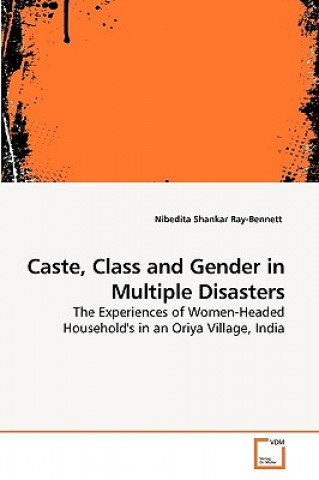
Caste, Class and Gender in Multiple Disasters
The Experiences of Women-Headed Household's in an Oriya Village, India
 Angličtina
 189 b
189 b
Až 30 dní na vrácení zboží
Zákazníci také koupili







 /
/
 Brožovaná
 1 214
Kč
1 214
Kč













 /
Brožovaná
313
Kč
/
Brožovaná
313
Kč


 /
Brožovaná
2 055
Kč
/
Brožovaná
2 055
Kč


The Indian subcontinent is prone to multiple disasters. The consequences for the poor in general are known. However, little academic work exists to understand the specific ways multiple disasters affect women-headed households from different social castes and classes and what is required to reduce their vulnerability to multiple disastes? This book responds to this gap by documenting the experiences of women-headed households in Orissa, and exploring possible ways forward. The super-cyclone in 1999,floods in 2001 and 2003, and drought in 2002 form the basis of the case study. Strongly interdisciplinary, the book draws upon several theoretical frameworks including disaster, development, sociological and anthropological approaches to caste, class and gender.The study has two key theoretical concerns; "vulnerability" on one hand and the "differential vulnerability" of women-headed households on the other, specifically in relation to their caste,class and gender. The analysis should be especially useful to policy-makers, practitioners, sociology of disasters, gender and disasters and development studies.


Informace o knize
Angličtina

Darujte tuto knihu ještě dnes
Je to snadné
1 Přidejte knihu do košíku a zvolte doručit jako dárek 2 Obratem vám zašleme poukaz 3 Kniha dorazí na adresu obdarovanéhoMohlo by vás také zajímat

 /
Brožovaná
381
Kč
/
Brožovaná
381
Kč





 /
Brožovaná
237
Kč
/
Brožovaná
237
Kč










 /
Brožovaná
1 737
Kč
/
Brožovaná
1 737
Kč

 /
Brožovaná
341
Kč
/
Brožovaná
341
Kč
 /
Brožovaná
3 221
Kč
/
Brožovaná
3 221
Kč
 /
Brožovaná
1 934
Kč
/
Brožovaná
1 934
Kč
Ahoj! Jsem Libroamiko, tvůj knižní rádce.
Jak ti můžu pomoct?