
 Kontakt
 Jak nakupovat
Doručení
Nákupní rádce
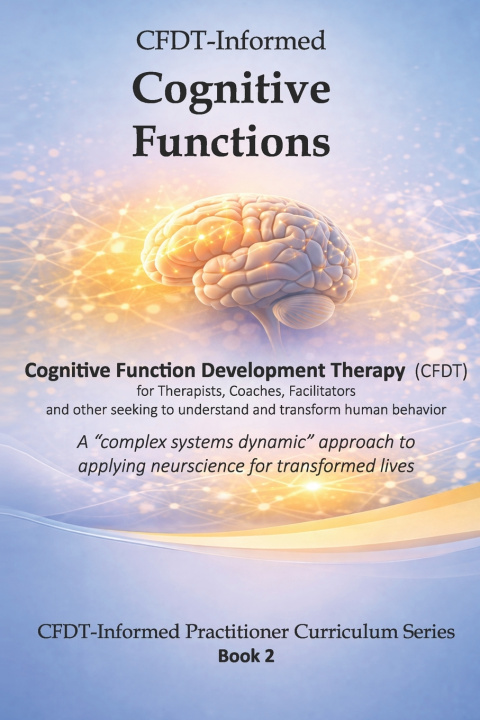
CFDT-Informed Cognitive Functions
A "complex systems dynamic" approach to applying neuroscience for transformed lives
 Angličtina
 55 b
55 b
 Nové
Nové
30 dní na vrácení zboží

How does the nervous system turn information into behavior-and why do some interventions help while others miss the level where change actually begins? 214 pages, 6x9 book
CFDT-Informed Cognitive Functions introduces the Information Flow Model, a practical architecture for understanding how cognitive functions emerge from the complex, self-organizing dynamics of the nervous system.
Written for practitioners, therapists, educators, coaches, and other helping professionals, this core-tier volume moves beyond surface behavior and asks a deeper question: What is the nervous system doing with information before the person explains, reacts, learns, avoids, connects, or changes?
Brian Beyst and Jen Beyst clarify how information flows through layered systems of human function, including:
- Survival cognitive functions and the nervous system's prime directive
- Foundational cognitive emotions: happiness, anger, fear, disgust, and sadness
- Primary cognitive functions, including alerting, orienting, executive attention, encoded memory, and working memory
- Learning cognitive functions and the construction of more complex proficiency
- Social cognitive functions and the relational use of information
- Top-down and bottom-up processes, and why the difference matters for intervention
- Internal and external environments as active sources of information
- Complex systems dynamics, Bayesian inference, and targeted neuroplastic remodeling
This book helps practitioners avoid the common mistake of treating behavior as if it were only a matter of insight, motivation, personality, or compliance. Observable behavior is the emergent output of a living system. If the wrong level of the system is addressed, the intervention may sound reasonable while leaving the underlying organization unchanged.
CFDT-Informed Cognitive Functions gives readers a clearer way to understand why clients may talk insightfully while remaining stuck, why threat can override reason, why learning depends on what lower levels make available, and why social behavior cannot be understood apart from the cognitive functions supporting it.
This is not a generic psychology overview. It is a working model for practitioners who want to understand cognitive function development with greater precision, stronger fidelity, and better clinical usefulness.


Informace o knize
Angličtina

Darujte tuto knihu ještě dnes
Je to snadné
1 Přidejte knihu do košíku a zvolte doručit jako dárek 2 Obratem vám zašleme poukaz 3 Kniha dorazí na adresu obdarovanéhoAhoj! Jsem Libroamiko, tvůj knižní rádce.
Jak ti můžu pomoct?