
 Kontakt
 Jak nakupovat
Doručení
Nákupní rádce
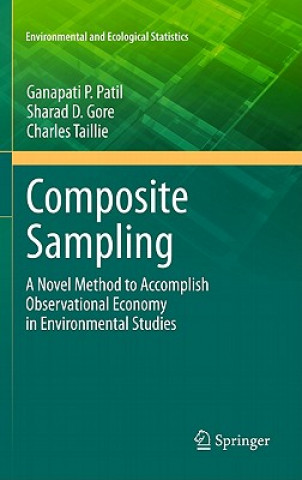
Composite Sampling
A Novel Method to Accomplish Observational Economy in Environmental Studies
 Angličtina
 265 b
265 b
30 dní na vrácení zboží
Zákazníci také koupili







 /
/
 Brožovaná
 827
Kč
827
Kč


Sampling consists of selection, acquisition, and quantification of a part of the population. While selection and acquisition apply to physical sampling units of the population, quantification pertains only to the variable of interest, which is a particular characteristic of the sampling units. A sampling procedure is expected to provide a sample that is representative with respect to some specified criteria. Composite sampling, under idealized conditions, incurs no loss of information for estimating the population means. But an important limitation to the method has been the loss of information on individual sample values, such as, the extremely large value. In many of the situations where individual sample values are of interest or concern, composite sampling methods can be suitably modified to retrieve the information on individual sample values that may be lost due to compositing. This book presents statistical solutions to issues that arise in the context of applications of composite sampling.


Informace o knize
Angličtina
Kategorie

Darujte tuto knihu ještě dnes
Je to snadné
1 Přidejte knihu do košíku a zvolte doručit jako dárek 2 Obratem vám zašleme poukaz 3 Kniha dorazí na adresu obdarovanéhoMohlo by vás také zajímat




 /
Brožovaná
275
Kč
/
Brožovaná
275
Kč