
 Kontakt
 Jak nakupovat
Doručení
Nákupní rádce
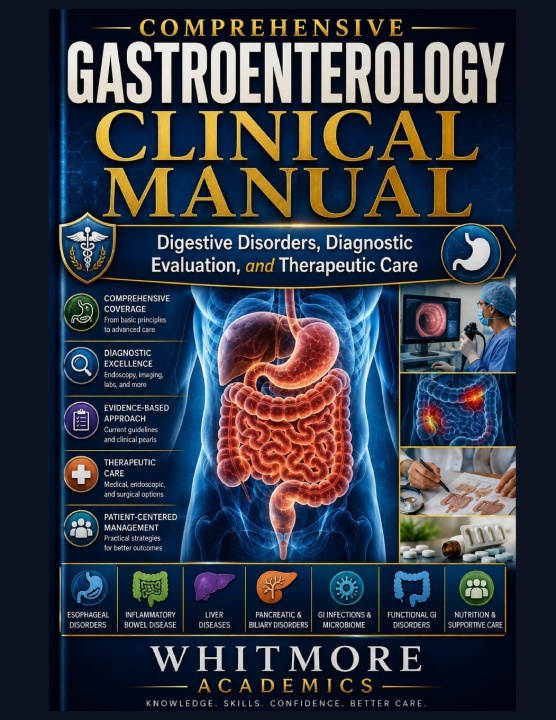
COMPREHENSIVE GASTROENTEROLOGY CLINICAL MANUAL
Digestive Disorders, Diagnostic Evaluation, and Therapeutic Care
 Angličtina
 393 b
393 b
 Připravujeme
 Nové
Nové
Až 30 dní na vrácení zboží
Zákazníci také koupili




COMPREHENSIVE GASTROENTEROLOGY CLINICAL MANUAL
Understanding gastrointestinal disease requires more than memorizing individual disorders.
Effective clinical assessment begins with recognizing symptoms and patterns, understanding relevant anatomy and physiology, selecting appropriate diagnostic approaches, interpreting findings in context, and connecting the clinical picture to appropriate management considerations.
**Comprehensive Gastroenterology Clinical Manual** provides a structured reference to the major concepts involved in evaluating digestive disorders and understanding their clinical management.
Designed as an accessible clinical reference, this manual brings together gastrointestinal disorders, diagnostic evaluation, clinical reasoning, and therapeutic care in one organized resource. Readers will explore the digestive system from a practical clinical perspective, with attention to common presentations, diagnostic pathways, disease mechanisms, complications, and management principles.
Topics covered include:
• Gastrointestinal anatomy and physiology
• Clinical assessment of digestive disorders
• History taking and symptom evaluation
• Abdominal examination
• Gastrointestinal laboratory testing
• Diagnostic imaging
• Endoscopic evaluation
• Pathology and tissue assessment
• Esophageal disorders
• Gastroesophageal reflux disease
• Esophagitis and related conditions
• Motility disorders
• Gastric disorders
• Peptic ulcer disease
• Gastritis
• Helicobacter pylori-related disease
• Gastrointestinal bleeding
• Small-intestinal disorders
• Malabsorption syndromes
• Inflammatory bowel disease
• Crohn's disease
• Ulcerative colitis
• Irritable bowel syndrome
• Colorectal disorders
• Colorectal cancer concepts
• Liver and biliary disorders
• Gallbladder disease
• Pancreatic disorders
• Gastrointestinal infections
• Nutritional considerations
• Diagnostic reasoning
• Differential diagnosis
• Therapeutic approaches
• Complications and clinical monitoring
• Patient-centered care
The manual emphasizes the relationship between **symptoms, clinical findings, diagnostic testing, and management decisions**.
A patient presenting with abdominal pain, nausea, vomiting, diarrhea, constipation, dysphagia, gastrointestinal bleeding, jaundice, weight loss, or altered bowel habits may have multiple possible causes.
The clinical challenge is not simply identifying a disease name. It is understanding how the available information fits together.
This book therefore provides a framework for thinking about gastrointestinal problems systematically.
Readers are encouraged to consider:
**What is the presenting problem?**
**Which findings are clinically important?**
**What conditions should be considered?**
**Which diagnostic approaches may help distinguish among possibilities?**
**How should findings be interpreted in clinical context?**
**What complications should be recognized?**
**What management principles apply?**
This approach helps connect individual facts into a broader clinical picture, The book also addresses diagnostic evaluation across multiple modalities.
Laboratory studies, imaging, endoscopy, pathology, and other diagnostic approaches can each contribute different information.
Understanding the strengths and limitations of these approaches is an important part of clinical reasoning.
Endoscopic procedures, for example, can provide direct visualization of gastrointestinal structures and may allow tissue sampling or therapeutic intervention.


Informace o knize
Angličtina