
 Kontakt
 Jak nakupovat
Doručení
Nákupní rádce
 Angličtina
 45 b
45 b
 Nové
Nové
30 dní na vrácení zboží

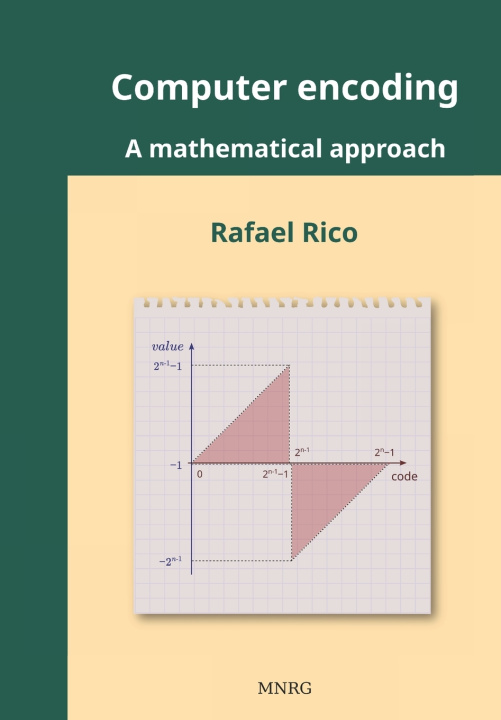
Since the computer's role is to process information, it is essential that this information be structured in a way that facilitates its interpretation and management. Consequently, before delving into the branch of engineering concerned with the design, maintenance, and evaluation of computers -Computer Architecture- we must establish the encoding rules that will shape the data and enable us to use it.
The exposition begins with encoding systems in general, then moves on to the specific case of computers, where confining representations to a limited space leads to modular arithmetic. In this context, the rules governing the different types of numbers are defined using a novel operator-based approach, such as BIN, VAL-BIN, SM, C2, and others. Following the discussion of numbers, the text addresses the representation of sets of elements: characters, colors, and instructions. Finally, the text concludes with a presentation of the various techniques aimed at minimizing the representation space.
The book includes numerous step-by-step solved examples and a large number of proposed exercises, many of which come with solutions, making it a highly practical resource for students and engineers.


Informace o knize
Angličtina
