
 Kontakt
 Jak nakupovat
Doručení
Nákupní rádce
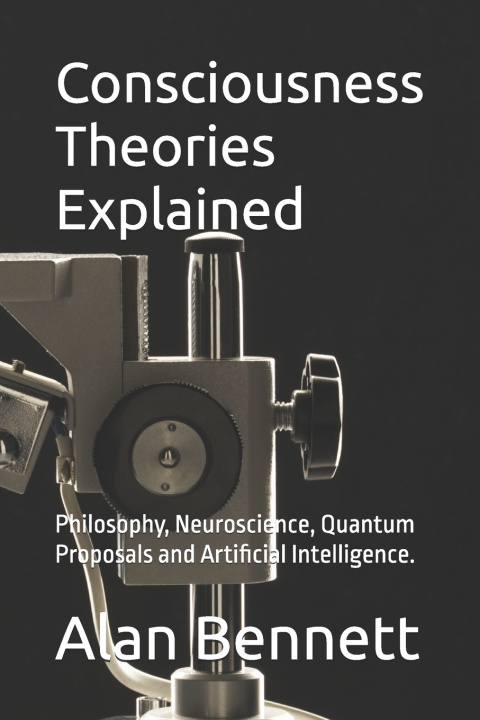
Consciousness Theories Explained
Philosophy, Neuroscience, Quantum Proposals and Artificial Intelligence.
 Angličtina
 47 b
47 b
Až 30 dní na vrácení zboží

Consciousness Theories Explained: Philosophy, Neuroscience, Quantum Proposals and Artificial Intelligence offers a clear, disciplined, and wide-ranging examination of one of the most enduring problems in human thought: what consciousness is, what it explains, and what it may ultimately resist explaining.
Rather than advancing a new theory, this book evaluates the major frameworks through which consciousness has been understood, from classical philosophy to contemporary neuroscience, artificial intelligence, and speculative quantum models. Its guiding concern is not enthusiasm or novelty, but standards: what counts as evidence, what qualifies as explanation, and where confidence outruns justification.
The book begins by clarifying what is meant by consciousness itself. It distinguishes conscious experience from intelligence, behaviour, information processing, and reportability, and shows why many debates falter by conflating these distinct questions. Drawing on legal analogies, it introduces disciplined criteria for assessing explanatory claims, separating correlation from causation, description from explanation, and confidence from proof.
A substantial philosophical section traces the inheritance shaping modern discussions. From Aristotle's integrated view of mind and life, through the Cartesian separation of mind and body, empiricist accounts of experience and personal identity, and Kant's analysis of the limits of explanation, the book shows how contemporary puzzles arise from earlier conceptual decisions rather than from scientific ignorance alone. The "hard problem" of consciousness is reconsidered in this historical and methodological light, not dismissed, but placed within a longer tradition of reflective restraint.
The book then turns to modern scientific and theoretical models. It examines leading neuroscientific approaches, including Global Workspace Theory, Integrated Information Theory, Higher-Order Thought theories, and Recurrent Processing accounts, asking what each genuinely explains and what remains untouched. It considers why quantum explanations repeatedly re-emerge, what they would need to demonstrate to succeed, and why many fall short of their ambitions.
Later chapters explore consciousness at its boundaries: anaesthesia, coma, disorders of consciousness, fragmented mental states, and near-death experiences. These cases test the limits of inference from behaviour and brain activity, revealing how easily absence of response can be mistaken for absence of experience.
The final sections address artificial intelligence, simulation, and machine consciousness, carefully separating intelligence from experience and examining what evidence would be required before attributing consciousness, responsibility, or moral status to artificial systems. Legal and ethical implications are treated seriously, without speculative excess.
Throughout, the book maintains a consistent tone of intellectual humility. Consciousness is treated not as a puzzle on the verge of final solution, but as a layered problem sitting at the intersection of experience, explanation, and responsibility. The result is a rigorous, accessible, and disciplined guide for readers seeking clarity rather than slogans.
Written by an Australian lawyer and former academic, Consciousness Theories Explained will appeal to readers interested in philosophy of mind, neuroscience, artificial intelligence, ethics, and the standards by which complex claims should be judged.


Informace o knize
Angličtina
