
 Kontakt
 Jak nakupovat
Doručení
Nákupní rádce
Dancer Defects
 Angličtina
 252 b
252 b
30 dní na vrácení zboží
Zákazníci také koupili





 /
/
 List
List
 218
Kč
218
Kč





 /
Pevná
1 116
Kč
/
Pevná
1 116
Kč


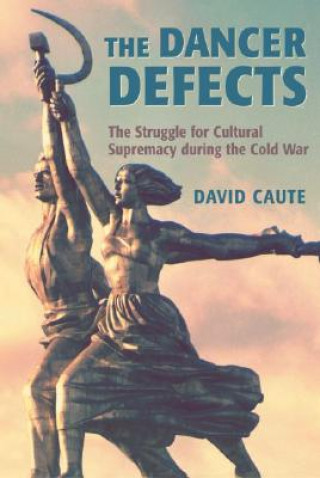
The cultural Cold War between the Soviet Union and the West was without precedent. At the outset of this original and wide-ranging historical survey, David Caute establishes the nature of the extraordinary cultural competition set up post-1945 between Moscow, New York, London, and Paris, with the most intimate frontier war staged in the city of Berlin. Using sources in four languages, the author of "The Fellow-Travellers" and "The Great Fear" explores the cultural Cold War as it rapidly penetrated theatre, film, classical music, popular music, ballet, painting, and sculpture, as well as propaganda by exhibition. Major figures central to Cold War conflict in the theatre include Brecht, Miller, Sartre, Camus, Havel, Ionesco, Stoppard, and Konstantin Simonov. Among leading film directors involved were Eisenstein, Romm, Chiarueli, Aleksandrov, Kazan, Tarkovsky, and Wajda. In the field of music, the Soviet Union in the Zhdanov era vigorously condemned 'modernism', 'formalism', and the avant-garde. A chapter is devoted to the intriguing case of Dmitri Shostakovich, and the disputed authenticity of his 'autobiography' Testimony. Meanwhile, in the West the Congress for Cultural Freedom was sponsoring the modernist composers most vehemently condemned by Soviet music critics, notably Stravinsky. The Soviet Party was unable to check the appeal of jazz on the "Voice of America", then rock music, to young Russians. Visits to the West by the Bolshoi and Kirov ballet companines, the pride of the USSR, were fraught with threats of cancellation and the danger of defection. Caute dampens overheated speculations about KGB plots to injure Rudolf Nureyev and other defecting dancers. Turning to painting, where socialist realism prevailed in the USSR and dissident art was often brutally repressed, Caute explores the paradox of Picasso's membership of the French Communist Party. Re-assessing the extent of covert CIA patronage of abstract expressionist artists like Jackson Pollock, Caute finds that the CIA's role has been much exaggerated. Caute also challenges some recent accounts of 'Cold War culture', which virtually ignore the Soviet performance and cultural activity outside the USA. Soviet artistic standards and teaching levels were exceptionally high, but the regime's endemic fear of free innovation finally accelerated its collapse.


Informace o knize
Angličtina
Kategorie

Darujte tuto knihu ještě dnes
Je to snadné
1 Přidejte knihu do košíku a zvolte doručit jako dárek 2 Obratem vám zašleme poukaz 3 Kniha dorazí na adresu obdarovanéhoMohlo by vás také zajímat


 /
Brožovaná
199
Kč
/
Brožovaná
199
Kč



 /
Brožovaná
2 745
Kč
/
Brožovaná
2 745
Kč

 /
Brožovaná
237
Kč
/
Brožovaná
237
Kč



Ahoj! Jsem Libroamiko, tvůj knižní rádce.
Jak ti můžu pomoct?