
 Kontakt
 Jak nakupovat

Doručení
Nákupní rádce
 Angličtina
 50 b
 Nové
Až 30 dní na vrácení zboží

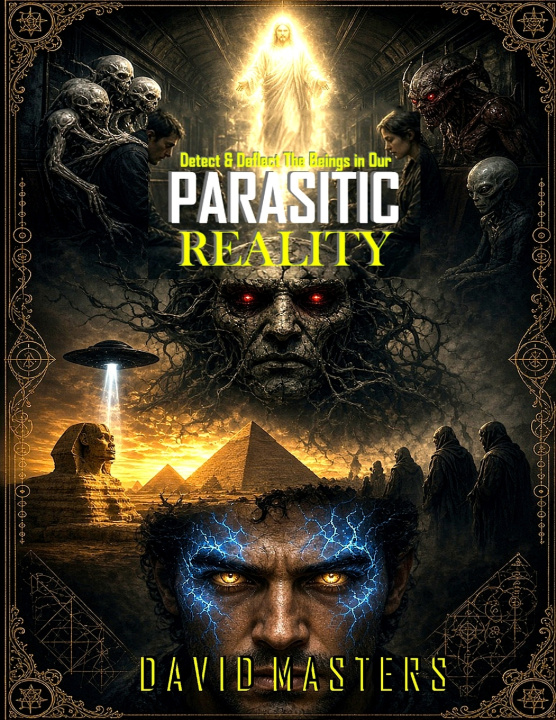
ARE ENTITIES AMONG US?
The Parasitic Nature of the Disembodied Anti-Human Intelligence
They are remnants of a corrupted union, separated from the physical existence through which they once expressed themselves. Their former bodies are gone, yet their existence continues.
The ancient Book of Enoch presents a disturbing explanation for the origin of evil spirits, one that differs from the conventional image of demons inhabiting a distant underworld. In 1 Enoch 15:8-11, the prophet receives an account of what happens to the spirits of the giants after their physical bodies perish. These beings, born from the union of heavenly Watchers and human women, are described as possessing a dual nature, part spiritual and part fleshly. When their bodies are destroyed, their spirits remain upon the earth. The text declares that these beings will be called evil spirits and that their habitation will be on earth. Within the Enochic worldview, this is the beginning of a persistent, disembodied presence within the human environment.
1 Enoch 15:8-11:
"Now the giants, who are born from spirit and flesh, shall be called evil spirits upon the earth, and on the earth shall be their habitation."
Within the Enochic worldview, this passage describes the spirits of the dead giants as remaining on earth rather than departing to a distant underworld. It presents the origin of evil spirits as the consequence of the union between the heavenly Watchers and human women.
The most unsettling feature of this account is its parasitic aspect. The spirits of the giants are not portrayed as independent creators capable of establishing a new order of life. They are remnants of a corrupted union, separated from the physical existence through which they once expressed themselves. Their former bodies are gone, yet their existence continues. The passage associates these spirits with affliction, oppression, and conflict among human beings. From a theological perspective, this suggests a form of existence dependent upon disturbing the lives of others rather than producing anything of its own. The parasite becomes a powerful metaphor for an intelligence that takes without creating, consumes without replenishing, and persists through the suffering or disorder it causes.
This idea invites a broader examination of what parasitism means beyond the biological world. In nature, a parasite survives by exploiting a host, redirecting resources, weakening defenses, and adapting its behavior to remain undetected. Human relationships can display comparable patterns. A manipulative individual may attach himself to another person's generosity, confidence, authority, or emotional stability, gradually converting those qualities into instruments of control. Such a person does not necessarily destroy the host immediately. In many cases, the relationship survives precisely because the exploitation proceeds incrementally. Trust becomes access, access becomes influence, and influence becomes dependency. The host may not recognize the damage until personal judgment, independence, and vitality have been substantially diminished.
Read symbolically, the Enochic account offers a framework for understanding this kind of predatory influence. The entity that cannot build must appropriate. The entity that cannot sustain itself must find something it can exploit. What appears outwardly ordinary may conceal a relationship structured around extraction rather than mutual exchange. The ancient narrative thus becomes a warning about the difference between an influence that strengthens human life and one that quietly feeds upon it.


Informace o knize
Angličtina
Kategorie

Darujte tuto knihu ještě dnes
Je to snadné
1 Přidejte knihu do košíku a zvolte doručit jako dárek 2 Obratem vám zašleme poukaz 3 Kniha dorazí na adresu obdarovanéhoAhoj! Jsem Libroamiko, tvůj knižní rádce.
Jak ti můžu pomoct?