
 Kontakt
 Jak nakupovat
Doručení
Nákupní rádce
 Angličtina
 87 b
87 b
30 dní na vrácení zboží

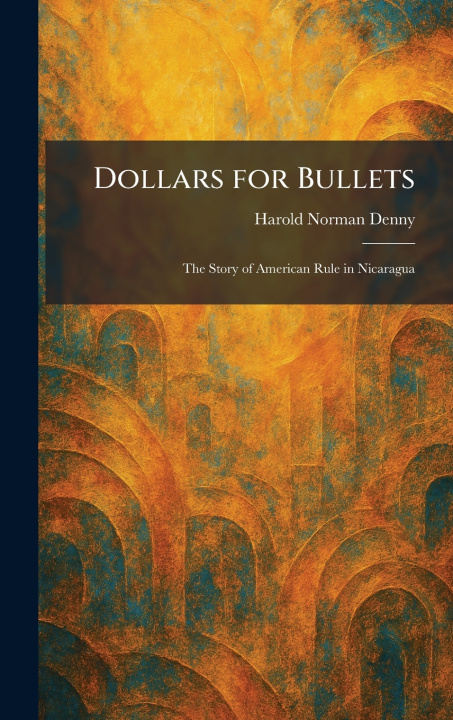
"Dollars for Bullets, the Story of American Rule in Nicaragua" provides a comprehensive and insightful account of the United States' military and financial intervention in Nicaragua during the early 20th century. Written by Harold Norman Denny, a journalist who observed these events firsthand, the work delves into the intricate web of "Dollar Diplomacy" and the subsequent deployment of the U.S. Marines to maintain order and protect American economic interests in the region.
The narrative explores the transition from economic influence to outright military occupation, detailing the political struggles, revolutionary movements, and the complex relationship between Washington and Managua. Denny examines the roles of American bankers and diplomats, offering a detailed look at the motivations behind foreign intervention and its lasting impact on Nicaraguan sovereignty. This work serves as a vital historical record of the era of American expansionism in Central America, capturing the tension between diplomatic ambitions and the realities of armed conflict.
Essential for students of international relations and Latin American history, "Dollars for Bullets, the Story of American Rule in Nicaragua" remains a significant study of the geopolitical forces that shaped the Caribbean Basin during a transformative period in United States history.
This work has been selected by scholars as being culturally important, and is part of the knowledge base of civilization as we know it. This work was reproduced from the original artifact, and remains as true to the original work as possible. Therefore, you may see the original copyright references, library stamps (as most of these works have been housed in our most important libraries around the world), and other notations in the work.
This work is in the public domain in the United States of America, and possibly other nations. Within the United States, you may freely copy and distribute this work, as no entity (individual or corporate) has a copyright on the body of the work.
As a reproduction of a historical artifact, this work may contain missing or blurred pages, poor pictures, errant marks, etc. Scholars believe, and we concur, that this work is important enough to be preserved, reproduced, and made generally available to the public. We appreciate your support of the preservation process, and thank you for being an important part of keeping this knowledge alive and relevant.


Informace o knize
Angličtina
