Doprava zdarma při nákupu nad 1 499 Kč přes Zásilkovnu nebo PPL Box.

Staňte se součástí komunity milovníků knih z celého světa a získejte hromadu výhod.
Založit účet zdarma
Doprava zdarma se Zásilkovnou nad 1 499 Kč
Kurýr DPD 69 Kč
Balíkovna 69 Kč
PPL kurýr 74 Kč
PPL box 39 Kč
Zásilkovna 39 Kč
Výdejní místo DPD 49 Kč
PPL shop 49 Kč
Balíkovna 49 Kč
 Kontakt
 Jak nakupovat
Pomoc
Doručení
Kurýr DPD 69 Kč
Balíkovna 69 Kč
PPL kurýr 74 Kč
PPL box 39 Kč
Zásilkovna 39 Kč
Výdejní místo DPD 49 Kč
PPL shop 49 Kč
Balíkovna 49 Kč
Doprava zdarma se Zásilkovnou nad 1 499 Kč
Nákupní rádce
Jsme tu pro vás!
571 999 090
Můj účet
▸
Prázdný
0
Doprava zdarma při nákupu nad 1 499 Kč přes Zásilkovnu nebo PPL Box.
Dollhouse Miniature Furniture for Beginners
Scale Proportions, Simple Materials and Room Setting Ideas Explained
Jazyk
 Angličtina
Angličtina
Kniha
Brožovaná
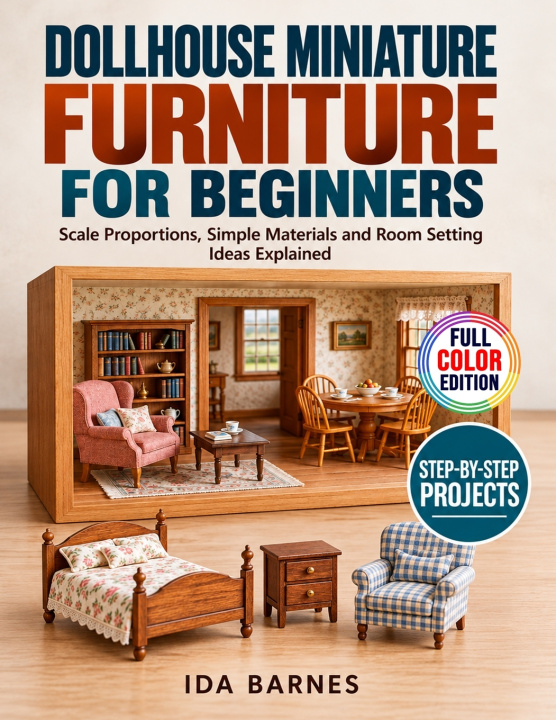
Twenty-four projects. Eight rooms. Four foundational techniques taught once before a single piece ge...
Celý popis
Libristo kód: 54065790
?
 57 b
57 b
 Nové
Nové
57 b
Nové
568
Kč
Skladem u dodavatele
Odesíláme za 10-16 dnů
Až 30 dní na vrácení zboží

Twenty-four projects. Eight rooms. Four foundational techniques taught once before a single piece gets built.
That is the shape of this book, stated plainly before anything else. Every dimension in every project traces back to one conversion method taught in the opening chapters, then reused without repeating itself through a bedroom, a living room, a kitchen, a dining room, a bathroom, an office, and an outdoor corner. A short practice box, built first, turns that method into muscle memory in twenty minutes.
What the Twenty-Four Projects Build
- Build a full bed with an upholstered headboard and a matching nightstand
- Assemble a wardrobe with a working hinged door and a three-drawer dresser topped with a swivel mirror
- Upholster a rolled-arm sofa and a wingback armchair with its own footstool
- Cut and mitre a coffee table pair, a narrow bookshelf, and a pedestal side table
- Install a kitchen cabinet run with a countertop sink and a hinged wall cabinet
- Set a six-chair dining table beside a glass-front china hutch and finished place settings
- Fit a bathroom vanity around a countertop basin and a hinged cabinet door
Every project states its finished size in inches at 1:12 scale beside the real-world measurement it stands in for, so no dimension ever has to be guessed from a photograph.
Nothing past Chapter Four asks for a skill that chapter has not already demonstrated once, in full, on its own. Each later project chapter names the exact earlier chapter its technique came from, so a joint, a hinge, or a finish never has to be relearned from scratch the second, third, or twelfth time it shows up.
What the Later Chapters Add
- A drop-front writing desk whose drawer front hides real pigeonhole storage
- Three lamp styles and one hand-stitched braided rug, batch-built for reuse
- A room-by-room arranging chapter, working from an empty shell to a finished scene
- A symptom-based repair reference for a cracked joint or a wobbling leg
This is a hands-on woodworking guide built for a real dolls house, not a shortcut kit: a slatted porch bench and a tiered plant stand round out the outdoor corner, and every project's plans and cutting patterns are stated in inches before a single board is touched. The upholstery technique every sofa and chair in the book depends on is taught once, early, the same way the room-arranging chapters apply the same thinking behind building a roombox from an empty shell to every room furnished earlier.
A dollhouse furnished piece by piece and never stepped back from rarely reads as one coherent home. The arranging chapter exists because the last twenty minutes of any project matter as much as the first, and it applies the same way to every room built earlier in the book: an anchor piece placed first, real clearance checked before anything smaller is added, and accessories layered in only once the furniture itself has found its place.
Basswood, cardstock, and quilting cotton cover nearly every material list here, sourced from an ordinary craft or fabric store rather than a specialty supplier. A short toolkit gathered once in Chapter Two, a craft knife, a metal ruler, a set square, wood glue, covers all twenty-four projects without a second purchase along the way, and a materials note beside every project states exactly what that specific piece needs before a single cut is made.
A closing chapter organized by symptom, not by project, collects the fixes for a cracked joint, a warped panel, and a leg that will not sit flat, so a mistake three chapters back is never a reason to start over.
The workbench is already half set up. The first cut is a straight line and a steady hand away.
Give Chapter Two twenty minutes and see what happens.
Herečka
&
Polyglotka
EWA KASP
pro
Přehrát video


Libristo má největší výběr cizojazyčné literatury. Proto své knihy kupuji tady.
Informace o knize
Plný název
Dollhouse Miniature Furniture for Beginners
Autor
Ida Barnes
Jazyk
Angličtina
Angličtina
Vazba
Kniha - Brožovaná
Datum vydání
2026
Počet stran
130
EAN
9798178080085
Libristo kód
54065790
Nakladatelství
Independently published
Váha
321
Rozměry
216 x 280 x 7

Darujte tuto knihu ještě dnes
Je to snadné
1 Přidejte knihu do košíku a zvolte doručit jako dárek 2 Obratem vám zašleme poukaz 3 Kniha dorazí na adresu obdarovaného
Knižní rádce Libroamiko
Užíváním tohoto chatu komunikujete s generativní umělou inteligencí. Jeho užíváním také souhlasíte se zpracováním osobních údajů.
Ahoj! Jsem Libroamiko, tvůj knižní rádce.
Jak ti můžu pomoct?
Ahoj, jsem Libroamiko, můžu pomoct?