
 Kontakt
 Jak nakupovat
Doručení
Nákupní rádce
 Angličtina
 44 b
44 b
30 dní na vrácení zboží

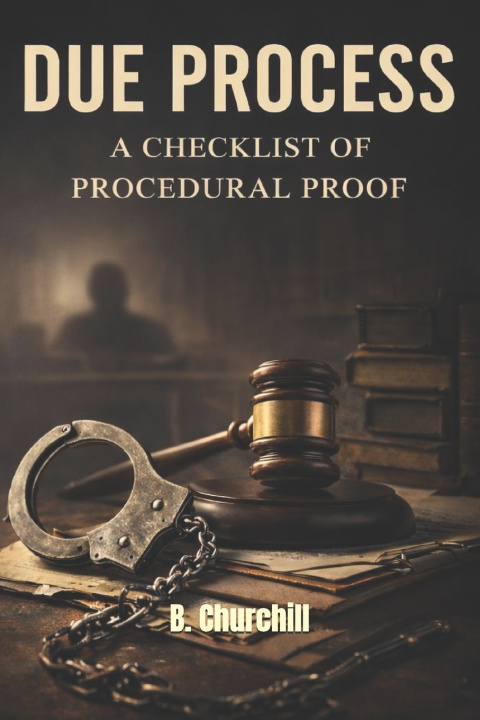
Due Process: A Checklist of Procedural Proof reframes one of the most misunderstood concepts in law by stripping it of emotion, rhetoric, and abstraction. This book demonstrates that due process violations are not subjective grievances or matters of opinion. They are mechanical failures-missing steps, skipped burdens, absent findings, improper sequencing, and unauthorized judgments-visible on the face of the record.
Rather than arguing what courts should have done, this book shows what the law requires to be done, and how authority fails when those requirements are not met. Jurisdiction, standing, notice, burden allocation, evidentiary thresholds, findings of fact, conclusions of law, sequencing, and finality are treated not as flexible principles, but as mandatory conditions. Each either occurred or did not. There is no middle ground.
Written in a clear, investigative, nonfiction style, this work replaces legal debate with verification. It teaches readers how to audit proceedings step by step, using the record itself, without inference, balancing, or presumption. Due process is presented as a binary system: authority attaches only when all required steps are completed in the proper order and documented. If even one step is missing, the outcome is not merely wrong-it is unauthorized.
This book is not a litigation manual and not an opinion piece. It is a structural examination of how lawful adjudication actually functions when enforced as written. An extensive appendix provides primary sources-constitutional provisions, statutes, procedural rules, and controlling case law-so readers can independently verify every claim and conduct their own research.
For readers seeking clarity rather than argument, proof rather than persuasion, and structure rather than slogans, Due Process: A Checklist of Procedural Proof offers a precise and verifiable framework for understanding when lawfully exercised power exists-and when it does not.


Informace o knize
Angličtina
