
 Kontakt
 Jak nakupovat
Doručení
Nákupní rádce
 Angličtina
 71 b
71 b
Až 30 dní na vrácení zboží

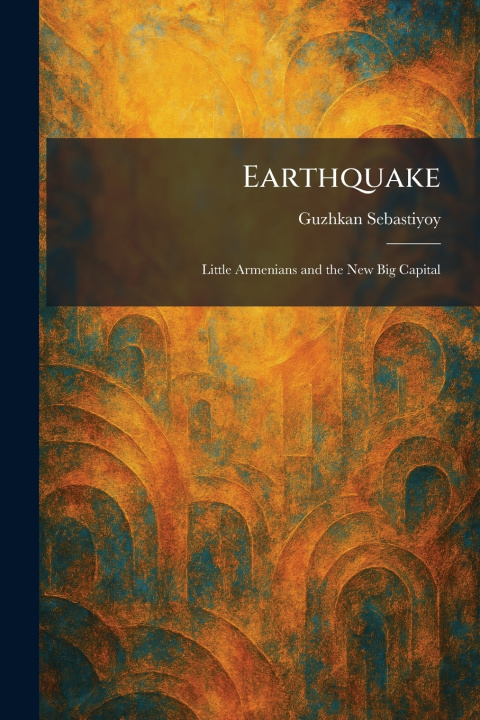
"EARTHQUAKE: Little Armenians and the New Big Capital" is a compelling historical and sociological examination of the Armenian people during a period of profound transition and upheaval. Written in the early 20th century, the work explores the intersections of cultural identity, economic shift, and the resilience of the Armenian community. The title serves as both a literal and metaphorical reference to the seismic changes affecting the population, particularly in relation to the emergence of new centers of power and capital.
The narrative delves into the struggles and aspirations of the "Little Armenians" as they navigate a world redefined by geopolitical shifts and internal social transformations. Through its exploration of community dynamics and the pursuit of stability in a volatile era, the book provides valuable insight into the Armenian experience following the Great War. It remains an important document for understanding the historical trajectory of a people seeking to rebuild their lives and maintain their heritage amidst the pressures of a modernizing world. This work is an essential read for those interested in the social fabric of the Armenian diaspora and the historical development of Armenian society in the 1920s.
This work has been selected by scholars as being culturally important, and is part of the knowledge base of civilization as we know it. This work was reproduced from the original artifact, and remains as true to the original work as possible. Therefore, you may see the original copyright references, library stamps (as most of these works have been housed in our most important libraries around the world), and other notations in the work.
This work is in the public domain in the United States of America, and possibly other nations. Within the United States, you may freely copy and distribute this work, as no entity (individual or corporate) has a copyright on the body of the work.
As a reproduction of a historical artifact, this work may contain missing or blurred pages, poor pictures, errant marks, etc. Scholars believe, and we concur, that this work is important enough to be preserved, reproduced, and made generally available to the public. We appreciate your support of the preservation process, and thank you for being an important part of keeping this knowledge alive and relevant.


Informace o knize
Angličtina
