
 Kontakt
 Jak nakupovat
Doručení
Nákupní rádce
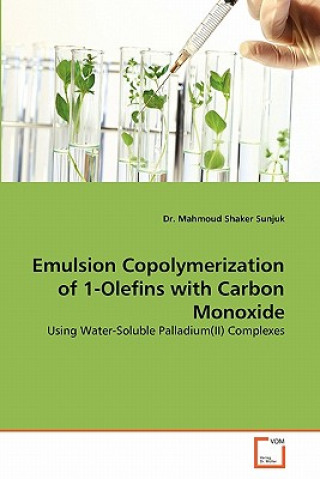
Emulsion Copolymerization of 1-Olefins with Carbon Monoxide
Using Water-Soluble Palladium(II) Complexes
 Angličtina
 120 b
120 b
Až 30 dní na vrácení zboží
Zákazníci také koupili

 /
/
 Pevná
Pevná
 586
Kč
586
Kč








 /
Brožovaná
361
Kč
/
Brožovaná
361
Kč


 /
Brožovaná
837
Kč
/
Brožovaná
837
Kč


 /
Brožovaná
402
Kč
/
Brožovaná
402
Kč
 /
Brožovaná
3 207
Kč
/
Brožovaná
3 207
Kč

Three types of palladium complexes with hydroxyalkyl, phosphonate and amine substituents attached to the phosphorus donors were employed in the emulsion copolymerization of propene/CO, butene/CO, and propene/butene/CO. Depending on the chain-length of the phosphorus attached substituents in the catalysts, four variables for the propene/CO, butene/CO, and propene/butene/CO copolymers were controlled: (i) the regioregularity; (ii) the molecular weight, and (iii) the glass transition temperature and the melting point (Tg and Tm). Stable dispersions are obtained by introduction of undecenoic acid as a third or fourth monomer into the propene/CO, butene/CO, and propene/butene/CO copolymers and no phase separation, or the formation of a coagulum within ten weeks were observed. In these latices, hydrophilic carboxylic acid moieties covalently bound to the particle surface contribute to the stabilization. Using phase-transfer agents, namely methyl-beta-cyclodextrin (W7 M 1.8) in the process of the co- and terpolymerization of hydrophobic monomers in the emulsion polymerization led to better results.


Informace o knize
Angličtina
Kategorie

Darujte tuto knihu ještě dnes
Je to snadné
1 Přidejte knihu do košíku a zvolte doručit jako dárek 2 Obratem vám zašleme poukaz 3 Kniha dorazí na adresu obdarovanéhoMohlo by vás také zajímat
 /
Brožovaná
1 182
Kč
/
Brožovaná
1 182
Kč
 /
Brožovaná
381
Kč
/
Brožovaná
381
Kč


 /
Brožovaná
1 783
Kč
/
Brožovaná
1 783
Kč






 /
Brožovaná
815
Kč
/
Brožovaná
815
Kč
 /
Pevná
2 333
Kč
/
Pevná
2 333
Kč
 /
Brožovaná
237
Kč
/
Brožovaná
237
Kč






 /
Brožovaná
685
Kč
/
Brožovaná
685
Kč



Ahoj! Jsem Libroamiko, tvůj knižní rádce.
Jak ti můžu pomoct?