
 Kontakt
 Jak nakupovat
Doručení
Nákupní rádce
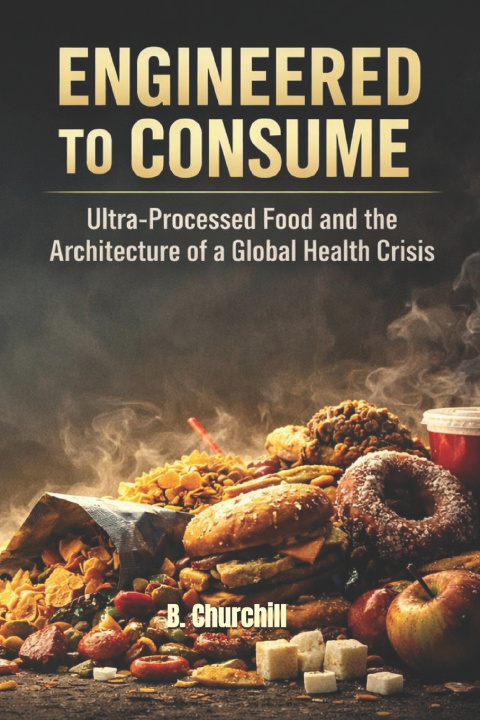
ENGINEERED TO CONSUME
Ultra-Processed Food and the Architecture of a Global Health Crisis
 Angličtina
 44 b
44 b
Až 30 dní na vrácení zboží

Ultra-processed foods now dominate the modern diet-but the health crisis they produce was not accidental. It was engineered.
This book examines how industrial food systems transformed nourishment into continuous exposure, replacing biological regulation with engineered consumption. Drawing on epidemiology, metabolic science, regulatory analysis, and documented industry practices, it shows how ultra-processed foods were designed to bypass satiety, condition appetite, and normalize overconsumption-while remaining fully compliant with existing law.
Rather than focusing on individual nutrients or lifestyle blame, this work exposes the structural mechanics of ultra-processing: how refined inputs, additive scaffolding, texture engineering, and sensory optimization altered eating behavior at population scale. It traces how regulatory frameworks-built for contamination and acute risk-failed to adapt to chronic, cumulative harm, allowing disease to rise alongside compliance.
The analysis follows the system from formulation to marketing, from childhood exposure to adult disease, and from domestic food environments to global export models. It documents how responsibility was displaced downward-onto individuals and healthcare systems-while accountability remained upstream and untouched. Chronic illness did not emerge as an anomaly, but as a predictable outcome of design.
This is not an anti-technology or anti-industry polemic. It is a structural investigation into how food environments drifted out of alignment with human biology-and how that misalignment became normalized. The book concludes by examining how defaults can be corrected without prohibition, moralizing, or personal blame, through environmental design, procurement standards, and outcome-based governance.
Written for readers who want evidence rather than slogans, this book reframes the global health crisis as a design problem with design solutions. It argues that food systems must be judged not by output or convenience, but by what they reliably produce in human terms.
When disease becomes ordinary, systems-not people-must be examined.


Informace o knize
Angličtina
Kategorie

Darujte tuto knihu ještě dnes
Je to snadné
1 Přidejte knihu do košíku a zvolte doručit jako dárek 2 Obratem vám zašleme poukaz 3 Kniha dorazí na adresu obdarovanéhoAhoj! Jsem Libroamiko, tvůj knižní rádce.
Jak ti můžu pomoct?