
 Kontakt
 Jak nakupovat
Doručení
Nákupní rádce
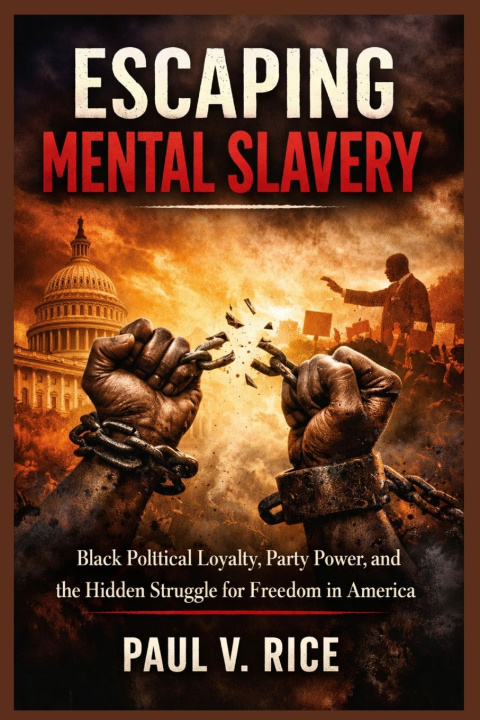
Escaping Mental Slavery
Black Political Loyalty, Party Power, and the Hidden Struggle for Freedom in America
 Angličtina
 40 b
40 b
Až 30 dní na vrácení zboží

What happens when a people move from chains on the body to chains on the mind? Escaping Mental Slavery is a bold and thought-provoking look at the long political journey of Black Americans, from slavery and Reconstruction to the civil rights era, the Obama years, and the shifting debates of today. This book does not settle for easy answers. It asks hard questions about power, loyalty, fear, identity, and freedom, and it invites readers to examine the forces that have shaped black political history across generations.
Through a clear and deeply engaging narrative, Paul V. Rice explores the roots of african american politics and the long story behind black voting patterns in the United States. He examines how the rise and fall of Reconstruction, the violence of Jim Crow, the promises of the New Deal, and the victories of the civil rights movement all helped form modern black political loyalty. He also looks closely at the lasting connection between black voters and democrats, while asking whether that bond has always produced the results many hoped for.
This book goes beyond party labels and public slogans. It opens up the deeper story of democratic party black voters and the uneasy history between the republican party and black america. It traces the struggles, betrayals, gains, and disappointments that shaped black american political thought, and it challenges readers to think honestly about what freedom really means in public life. From the painful road of slavery to freedom in america to the modern fight over ideas, this is a book that refuses to look away.
At the center of the book is a powerful question: can legal freedom exist without mental freedom? That is where the message of this mental slavery book becomes urgent. Escaping Mental Slavery is not just a title. It is a challenge. It speaks directly to the need for escaping mental slavery and breaking the habits of fear, dependence, and inherited political thinking. It is a serious work of black history and politics that asks whether a community can ever be truly free if its choices are made by tradition, pressure, or emotional control.
Readers who care about reconstruction and jim crow, the rise of federal power, and the search for dignity in American life will find this book both informative and unsettling in the best way. It captures the spirit of black political awakening and shows how party realignment in america changed the relationship between race and power. It also shines light on the role of race and american politics in shaping elections, loyalty, and national identity, while asking what it means to build lasting strength through black power and political identity rather than empty symbolism.
This book also speaks to readers trying to understand the long shadow of the southern strategy and black voters, the modern battles over voter suppression in america, and the unfinished work of the civil rights movement history that still echoes today. It offers a sharp and honest look at black america and party politics, but it does not stop there. It presses further into the question of whether true liberation demands more than voting. It asks whether real progress must also include independent thought, community strength, and a deeper sense of freedom and political independence.


Informace o knize
Angličtina

Darujte tuto knihu ještě dnes
Je to snadné
1 Přidejte knihu do košíku a zvolte doručit jako dárek 2 Obratem vám zašleme poukaz 3 Kniha dorazí na adresu obdarovanéhoAhoj! Jsem Libroamiko, tvůj knižní rádce.
Jak ti můžu pomoct?