
 Kontakt
 Jak nakupovat
Doručení
Nákupní rádce
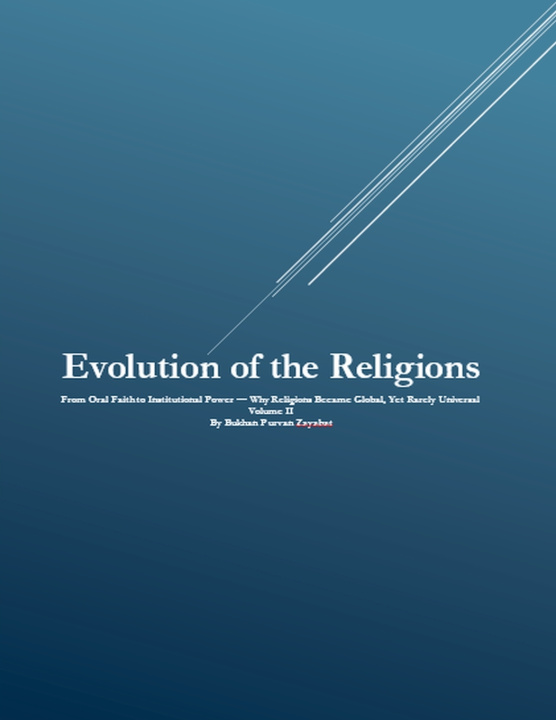
Evolution of the Religions
 Angličtina
 128 b
128 b
 Připravujeme
 Nové
Nové
Až 30 dní na vrácení zboží

Before there was religion, there was the human being.
A child looking at the sky.
A mother giving birth.
A family burying the dead.
A stranger asking why suffering exists.
A civilization searching for meaning beyond survival.
Then came scripture. Ritual. Priesthood. Temples. Churches. Mosques. Monasteries. Law. Wealth. Political power. Institutions.
Religion preserved memory, created communities, inspired compassion, educated generations, protected the vulnerable, resisted tyrants, and gave billions of human beings meaning.
But the institution created to preserve the sacred could also become something else:
the owner of truth, the governor of conscience, and sometimes the master of the human being.
This book asks one unsettling question:
When does faith become power-and when does power begin to betray faith?
It journeys through religion, empire, conversion, colonization, sacred language, wealth, political authority, women, children, conscience, reason, human dignity, and the treatment of the outsider.
Its argument is neither against religion nor for one religion above another.
It proposes a more demanding standard.
A religion is not truly universal because millions believe in it.
It becomes morally universal when the person who does not believe in it is still safe in its presence.
The believer must be free to believe.
The unbeliever must be free not to believe.
The convert must be free to enter.
The dissenter must be free to question.
The apostate must be free to leave.
The stranger must remain human.
Humanity does not need another struggle over which religion will conquer the world.
It needs religions, philosophies, and civilizations capable of standing beneath a greater ethical horizon:
human dignity without theological agreement.
The great religious question of history was:
Who belongs to us?
The question of the future must become:
Whom did we serve?
Because the sacred existed before the institution.
And no institution-religious, political, economic, or technological-has the right to own the human being.
This description follows the manuscript's central movement from the sacred human encounter to institutional power, conscience, dignity, and universal service.


Informace o knize
Angličtina

Darujte tuto knihu ještě dnes
Je to snadné
1 Přidejte knihu do košíku a zvolte doručit jako dárek 2 Obratem vám zašleme poukaz 3 Kniha dorazí na adresu obdarovanéhoAhoj! Jsem Libroamiko, tvůj knižní rádce.
Jak ti můžu pomoct?