Doprava zdarma při nákupu nad 1 499 Kč přes Zásilkovnu nebo PPL Box.

Staňte se součástí komunity milovníků knih z celého světa a získejte hromadu výhod.
Založit účet zdarma
Doprava zdarma se Zásilkovnou nad 1 499 Kč
Kurýr DPD 69 Kč
Balíkovna 69 Kč
PPL kurýr 74 Kč
PPL box 39 Kč
Zásilkovna 39 Kč
Výdejní místo DPD 49 Kč
PPL shop 49 Kč
Balíkovna 49 Kč
 Kontakt
 Jak nakupovat
Pomoc
Doručení
Kurýr DPD 69 Kč
Balíkovna 69 Kč
PPL kurýr 74 Kč
PPL box 39 Kč
Zásilkovna 39 Kč
Výdejní místo DPD 49 Kč
PPL shop 49 Kč
Balíkovna 49 Kč
Doprava zdarma se Zásilkovnou nad 1 499 Kč
Nákupní rádce
Jsme tu pro vás!
571 999 090
Můj účet
▸
Prázdný
0
Doprava zdarma při nákupu nad 1 499 Kč přes Zásilkovnu nebo PPL Box.
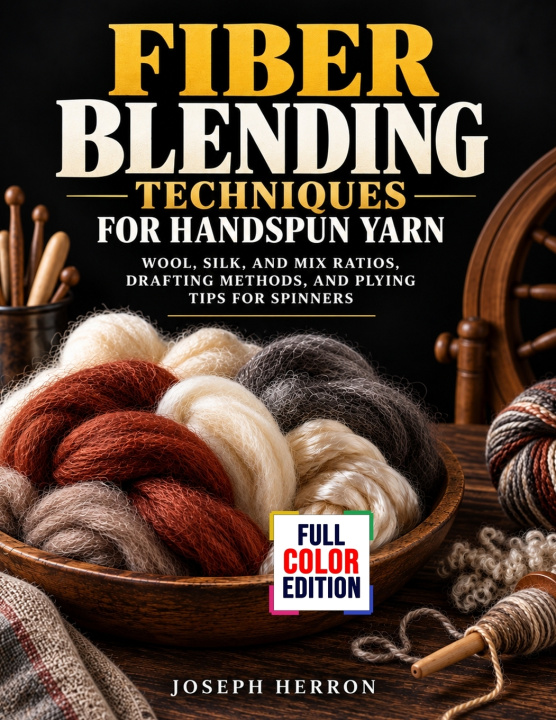
Fiber Blending Techniques for Handspun Yarn
Wool, Silk, and Mix Ratios, Drafting Methods, and Plying Tips for Spinners
Jazyk
 Angličtina
Angličtina
Kniha
Brožovaná
Your blended yarn looks even in the fiber and spins uneven anyway.Two fibers that never fought each...
Celý popis
Libristo kód: 53856815
?
 57 b
57 b
 Připravujeme
 Nové
Nové
57 b
Připravujeme
Nové
572
Kč
Očekávané naskladnění
Naskladnění 14. 09. 2026
Až 30 dní na vrácení zboží

Your blended yarn looks even in the fiber and spins uneven anyway.
Two fibers that never fought each other in the rolag start fighting the moment they hit the wheel. A silk-heavy single slides loose from a draft it was never suited to, a rolag that looked perfectly marbled produces a lumpy yarn, and beginners spend a bobbin wondering what went wrong regardless of spinning experience. Most spinning guides mention blending in a single paragraph and leave the rest to trial and error, which is exactly the gap this book was built to close.
Ratio and Draft, Solved Together
- Weigh wool and silk to an exact, repeatable ratio by weight instead of guessing by eye or by pile size
- Match a woolen or worsted draft to the blend's actual silk percentage, never out of habit alone
- Card, layer, or comb toward the specific texture each of eighteen tested recipes actually calls for
- Check wraps per inch and grist against real numbers before committing a whole prepared batch
- Ply a balanced, stable yarn using a simple hang test that catches problems while they're still small
- Twenty-one recurring spinning problems, each one diagnosed by symptom instead of by guesswork
Fifteen Chapters, One Sequence
Choosing a ratio for a real reason instead of a guess starts with understanding wool and silk properties first.
Six named sheep breeds, from Merino's tight crimp to Romney's coarser strength, are weighed fleece by fleece against mulberry's bright, near-white, combed roving and tussah's warmer, sometimes bleached tone, each fiber judged in its natural, undyed state before a single ounce gets blended.
A chapter of tools follows fiber preparation: hand cards, a blending board, wool combs, and a drum carder with its own brush and awl, each covered before carding or combing ever begins.
Ratio math, drafting method, plying, and finishing follow in the exact order a spinner actually needs them, each chapter building on the one before it rather than assuming knowledge that has not been taught yet.
A dedicated chapter on reading wraps per inch and grist turns "about the right thickness" into a real number checked at the wheel, with a prep log to record twist and yardage honestly from one bobbin to the next, the same habit that keeps a fiber stash easy to track months later.
Weight-targeted spinning gets its own chapter too, working backward from fingering, sport, or bulky weight to the exact singles thickness and ply count each one needs, whether spinning is done at a wheel or a spindle.
A troubleshooting chapter collects the recurring problems by symptom, streaky blends, a single that keeps breaking, a ply that refuses to balance, the accidental felting risk that shows up during washing, with the specific fix each one actually needs, organized for a quick check mid-session, so no problem outlasts a clear diagnosis.
By the closing chapter, four advanced recipes push past the basics: a deliberately under-blended two-tone marble that keeps its color runs intact, a three-fiber blend adding mohair for extra shine and strength, a gradient recipe that shifts from mostly wool to mostly silk along its own length, and a high-silk blend crossing the point where silk's own properties finally outweigh wool's.
Eighteen complete blend recipes carry every one of those decisions already made, turning the work of making a blend into stated numbers: exact ratio, prep method, draft, wraps per inch target, and ply structure for each one, finished at a niddy-noddy or skein winder wound onto a wooden frame rather than anything exotic.
A first attempt can follow real numbers instead of guessing at what "a bit of silk" is supposed to mean.
This is the book that explains why, not just what.
Herečka
&
Polyglotka
EWA KASP
pro
Přehrát video


Libristo má největší výběr cizojazyčné literatury. Proto své knihy kupuji tady.
Informace o knize
Plný název
Fiber Blending Techniques for Handspun Yarn
Autor
Joseph Herron
Jazyk
Angličtina
Angličtina
Vazba
Kniha - Brožovaná
Datum vydání
2026
Počet stran
140
EAN
9798173102676
Libristo kód
53856815
Nakladatelství
Independently published
Váha
343
Rozměry
216 x 280 x 8

Darujte tuto knihu ještě dnes
Je to snadné
1 Přidejte knihu do košíku a zvolte doručit jako dárek 2 Obratem vám zašleme poukaz 3 Kniha dorazí na adresu obdarovaného
Knižní rádce Libroamiko
Užíváním tohoto chatu komunikujete s generativní umělou inteligencí. Jeho užíváním také souhlasíte se zpracováním osobních údajů.
Ahoj! Jsem Libroamiko, tvůj knižní rádce.
Jak ti můžu pomoct?
Ahoj, jsem Libroamiko, můžu pomoct?