
 Kontakt
 Jak nakupovat
Doručení
Nákupní rádce
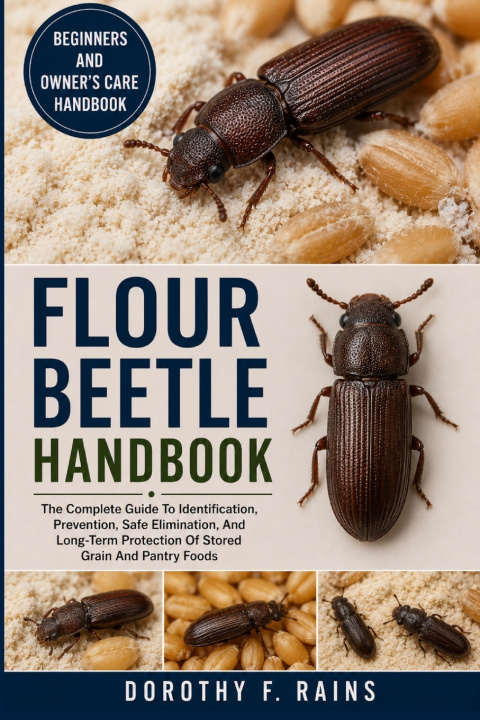
FLOUR BEETLE HANDBOOK
The Complete Guide To Identification, Prevention, Safe Elimination, And Long-Term Protection Of Stored Grain And Pantry Foods
 Angličtina
 40 b
40 b
 Nové
Nové
Až 30 dní na vrácení zboží

Introduction
Understanding Flour Beetles and Why They Matter
Flour beetles are among the most overlooked yet globally significant insects living alongside people. They do not draw attention through size, beauty, or danger, yet their presence is woven deeply into everyday life through food storage, agriculture, trade, and science. Found in homes, warehouses, mills, shops, and research laboratories, flour beetles quietly influence food security, economic stability, and even biological research. Understanding them is not simply a matter of pest awareness; it is a way of understanding how small organisms adapt to human environments and how people, in turn, must learn to manage shared spaces responsibly.
At first glance, flour beetles appear insignificant. They are small, reddish-brown insects often noticed only after an infestation has already taken hold. Many people encounter them accidentally, discovering them crawling in flour bags, rice containers, or cereal boxes. This initial reaction is usually annoyance or disgust, followed by the assumption that they are merely household pests with little importance beyond disposal. In reality, flour beetles represent one of the most successful insect groups to adapt to stored food environments created by people. Their success is a direct reflection of global food production systems, storage habits, and trade networks.
Flour beetles matter because they exist at the intersection of biology, human behavior, and economics. Their life cycles are closely tied to how people process, store, transport, and consume food. Wherever grains are harvested, milled, stored, or sold, flour beetles can potentially thrive. Their ability to survive in dry environments, reproduce rapidly, and feed on processed grains has allowed them to spread across continents alongside human civilization. As people expanded agriculture and storage technologies, flour beetles evolved alongside those changes, turning human food systems into ideal habitats.
One reason flour beetles are so widespread is their remarkable adaptability. Unlike insects that rely on narrow ecological conditions, flour beetles tolerate a broad range of temperatures, humidity levels, and food qualities. They do not require fresh grain; they thrive on flour dust, cracked grains, and processed food remnants that many other organisms cannot use. This flexibility makes them persistent and difficult to eliminate once established. Understanding this adaptability is key to understanding why infestations recur even after cleaning or discarding contaminated food.
Flour beetles also matter because of their reproductive efficiency. A single unnoticed population can grow into thousands within a short time. Eggs are laid directly in food sources, larvae develop hidden within the product, and adults continue reproducing for months. This rapid population growth allows infestations to spread silently before people become aware of the problem. By the time beetles are visible, contamination has often extended beyond a single container into cupboards, shelves, or entire storage rooms.
Beyond homes, flour beetles pose significant challenges in commercial food systems. In grain silos, food processing facilities, bakeries, and warehouses, infestations can lead to massive product losses. Contaminated goods must often be discarded entirely, even if only a portion is affected. This creates financial losses not only for businesses but also for farmers, distributors, and retailers. In regions where food scarcity is already a concern, the damage caused by stored-product insects can have serious consequences for food availability and affordability.
Flour beetles also influence international trade. Many countries enforce strict regulations regarding insect contamination in food products. A shipment of grain or flour found to contain live beetles may be rejected, delayed, or destroyed.


Informace o knize
Angličtina

Darujte tuto knihu ještě dnes
Je to snadné
1 Přidejte knihu do košíku a zvolte doručit jako dárek 2 Obratem vám zašleme poukaz 3 Kniha dorazí na adresu obdarovanéhoAhoj! Jsem Libroamiko, tvůj knižní rádce.
Jak ti můžu pomoct?