
 Kontakt
 Jak nakupovat
Doručení
Nákupní rádce
Formal Logic
 Angličtina
 88 b
88 b
30 dní na vrácení zboží

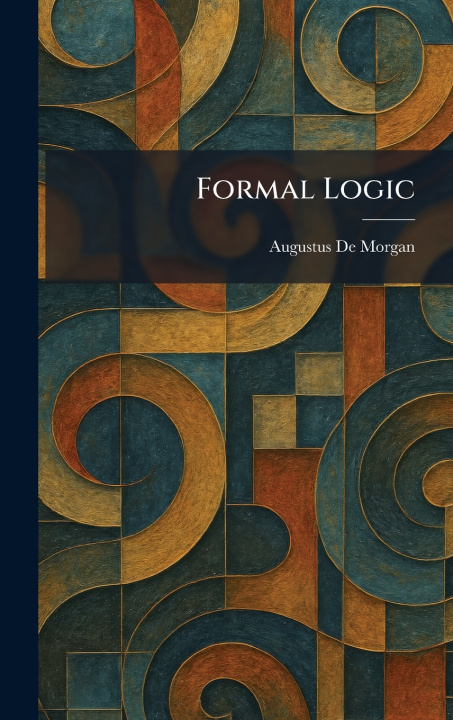
"Formal Logic (1847)" is a seminal contribution to the fields of mathematics and philosophy by the influential British mathematician Augustus De Morgan. This rigorous investigation represents a pivotal moment in the evolution of logical thought, as De Morgan seeks to expand the traditional Aristotelian syllogism through mathematical precision. The work introduces the concept of the quantification of the predicate and explores the complexities of propositional logic, laying the groundwork for what would eventually become modern symbolic logic.
De Morgan's approach bridges the gap between linguistic reasoning and mathematical calculation, providing a systematic framework for analyzing the structure of valid arguments. He delves into topics such as identity, relation, and the logic of probabilities, challenging contemporary scholars to view logic as a dynamic branch of mathematical inquiry rather than a static philosophical exercise. As a foundational text in the history of ideas, "Formal Logic (1847)" remains essential reading for students of mathematical logic, the philosophy of science, and the history of mathematics, offering deep insights into the mechanical processes of human reasoning.
This work has been selected by scholars as being culturally important, and is part of the knowledge base of civilization as we know it. This work was reproduced from the original artifact, and remains as true to the original work as possible. Therefore, you may see the original copyright references, library stamps (as most of these works have been housed in our most important libraries around the world), and other notations in the work.
This work is in the public domain in the United States of America, and possibly other nations. Within the United States, you may freely copy and distribute this work, as no entity (individual or corporate) has a copyright on the body of the work.
As a reproduction of a historical artifact, this work may contain missing or blurred pages, poor pictures, errant marks, etc. Scholars believe, and we concur, that this work is important enough to be preserved, reproduced, and made generally available to the public. We appreciate your support of the preservation process, and thank you for being an important part of keeping this knowledge alive and relevant.


Informace o knize
Angličtina
