
 Kontakt
 Jak nakupovat
Doručení
Nákupní rádce
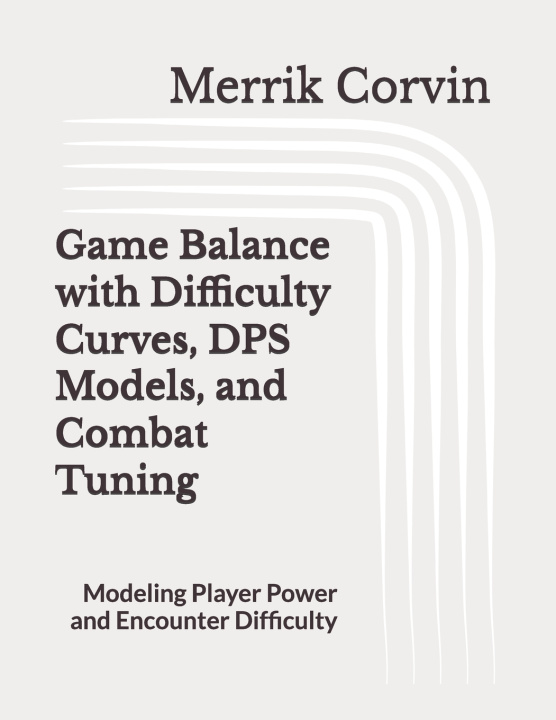
Game Balance with Difficulty Curves, DPS Models, and Combat Tuning
Modeling Player Power and Encounter Difficulty
 Angličtina
 40 b
40 b
 Nové
Nové
Až 30 dní na vrácení zboží

Turn combat balance from guesswork into a repeatable design practice. This practical guide explains how to measure player power, model damage, shape difficulty curves, and tune encounters with clear assumptions and testable results. It is written for game designers, combat designers, systems designers, technical designers, analysts, and developers who need numbers that support better player experiences.
Beginning with a sample action-RPG combat loop, the book establishes a shared vocabulary for challenge, fairness, mastery, survivability, and power. It then shows how to connect character statistics, equipment, skills, resources, positioning, and downtime to meaningful combat metrics. Worked examples make abstract concepts easier to apply, whether you are balancing a single ability or an entire progression system.
Inside, you will learn how to:
- Build player-power scorecards from attributes, gear, abilities, combat logs, burst damage, sustained damage, and defensive value.
- Calculate DPS while accounting for accuracy, critical hits, damage ranges, reloads, cast times, cooldowns, animation delays, and area-of-effect behavior.
- Estimate effective health under physical and magical damage, including armor, resistance, penetration, mitigation, healing, shields, and recovery windows.
- Design and compare linear, polynomial, exponential, and piecewise progression curves without creating sudden difficulty spikes or long plateaus.
- Scale enemy health, damage, defense, and utility according to combat roles rather than relying on indiscriminate stat inflation.
- Evaluate encounter composition, focus fire, threat distribution, waves, reinforcements, objectives, elite enemies, and phase-based bosses.
- Use time-to-kill targets to diagnose spongy enemies, burst deaths, weak pacing, and poorly timed combat mechanics.
- Balance abilities, resources, rotations, cooldowns, and opportunity costs while testing for dominant strategies.
- Create difficulty modes and optional challenges that adjust pressure, behavior, resources, and rewards in deliberate ways.
Chapters on simulation, telemetry, and playtesting connect mathematical models to evidence from real combat. You will see how to build deterministic simulations, collect damage and duration data, compare controlled scenarios, interpret variance, and combine quantitative findings with structured player feedback.
The final section turns these methods into a production-ready workflow. It covers balance sheets, versioned assumptions, prioritization, tuning records, and complete review processes. Spreadsheet exercises, sample equations, combat timelines, encounter comparisons, and before-and-after tuning examples help you move from a design question to a defensible adjustment.
Use this book as a reference during system planning, prototype evaluation, live balancing, and pre-release testing. Its goal is not to prescribe one formula, but to help you make combat decisions that are measurable, explainable, and suited to the experience your game intends to deliver.


Informace o knize
Angličtina

Darujte tuto knihu ještě dnes
Je to snadné
1 Přidejte knihu do košíku a zvolte doručit jako dárek 2 Obratem vám zašleme poukaz 3 Kniha dorazí na adresu obdarovanéhoAhoj! Jsem Libroamiko, tvůj knižní rádce.
Jak ti můžu pomoct?