
 Kontakt
 Jak nakupovat
Doručení
Nákupní rádce
 Angličtina
 145 b
145 b
30 dní na vrácení zboží
Zákazníci také koupili




 /
/
 Brožovaná
 416
Kč
416
Kč
















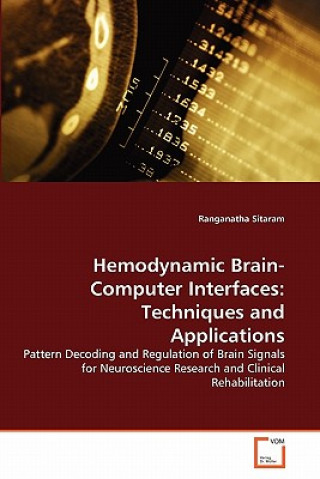
Brain-Computer Interfaces (BCI) utilise brain signals to activate or deactivate electromechanical devices and computers. Functional Near Infrared Spectroscopy (NIRS) and functional Magnetic Resonance Imaging (fMRI) are non-invasive methods for acquiring hemodynamic signals from the brain with the primary benefit of anatomical specificity of signals. Both NIRS and fMRI rely on the measurement of the blood oxygen level-dependent (BOLD) response of the brain. This book elucidates the technical approaches and algorithms used in implementing hemodynamic BCIs. The book demonstrates how brain states could be decoded from spatiotemporal patterns of brain signals to train individuals to volitionally regulate brain activity. It explains fundamental principles, emerging approaches, applications, and future directions for NIRS- and fMRI-based BCIs. Results of a number of experimental investigations illustrate how hemodynamic BCIs could not only be used for communication in paralysis, but also as powerful tools for experiments in neuroscience and rehabilitation and treatment of neurological disorders.


Informace o knize
Angličtina
Kategorie

Darujte tuto knihu ještě dnes
Je to snadné
1 Přidejte knihu do košíku a zvolte doručit jako dárek 2 Obratem vám zašleme poukaz 3 Kniha dorazí na adresu obdarovanéhoMohlo by vás také zajímat






 /
Brožovaná
308
Kč
/
Brožovaná
308
Kč





 /
Brožovaná
554
Kč
/
Brožovaná
554
Kč