
 Kontakt
 Jak nakupovat
Doručení
Nákupní rádce
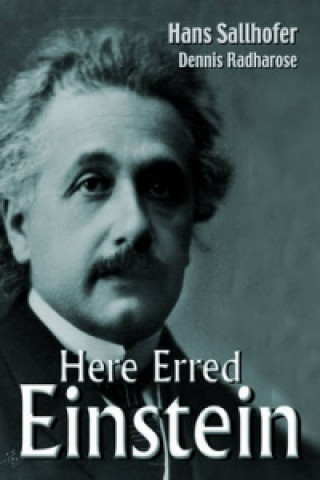
Here Erred Einstein
 Angličtina
 102 b
102 b
30 dní na vrácení zboží
Zákazníci také koupili


 /
/
 Brožovaná
 1 214
Kč
1 214
Kč










 /
Brožovaná
369
Kč
/
Brožovaná
369
Kč



The emergence of modern physics in the first three decades of the 20th century was accompanied by a loss of determinism. That loss is embodied in the Copenhagen interpretation of the theory of relativity. The development of physics-based technologies, both constructive and destructive occurred shortly thereafter at so dizzying a rate that scientists rarely took a critical look at the logical foundations of the Copenhagen interpretation and the theory of relativity, or at the consequences of the loss of determinism. This book contains a dialogue between a physicist and a philosopher on that issue. The dialogue is strongly contextualized with respect to the main players in physics during the first 60 years of the 20th century, and to the prevailing political conditions in Western Europe and the USA. It was galvanized by the debate and the subsequent abandonment of the Superconducting Super Collider, and also affords a lively understanding of Greek epistemology. Questioned by the philosopher, the physicist provides an account of the directions taken by physicists and the roads not travelled, as well as his own understanding of the nature of matter.


Informace o knize
Angličtina

Darujte tuto knihu ještě dnes
Je to snadné
1 Přidejte knihu do košíku a zvolte doručit jako dárek 2 Obratem vám zašleme poukaz 3 Kniha dorazí na adresu obdarovanéhoMohlo by vás také zajímat





 /
Brožovaná
444
Kč
/
Brožovaná
444
Kč