 Kontakt
 Jak nakupovat
Doručení
Nákupní rádce
 Angličtina
 610 b
610 b
30 dní na vrácení zboží
Zákazníci také koupili










 /
/
 Kalendář
 426
Kč
426
Kč



 /
/
 Brožovaná
2 375
Kč
Brožovaná
2 375
Kč





 /
Brožovaná
975
Kč
/
Brožovaná
975
Kč

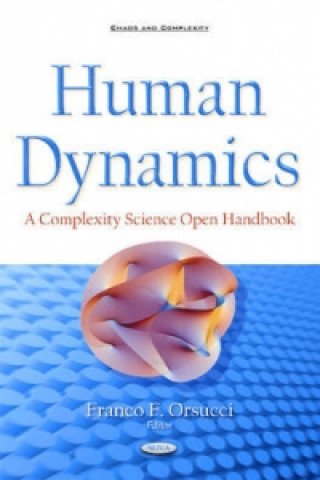
The classical Roman poet, Titus Lucretius Carus (c. 99 BC c. 55 BC), described the clinamen, or swerve, as an occurrence that we now call singularity, also popularised as the butterfly effect. His poem, De Rerum Natura (On the Nature of Things), reminds us that an awareness of the intrinsic complexity of natural dynamics has been present for a very long times in human culture (Lucretius, 54BC in 1971; Greenblatt, 2011). It is quite recently, however, that complexity has become a suitable scientific approach. The meta-paradigm of Complexity Science crosses over different disciplines, from physics and mathematics to biology, social sciences, and now psychotherapy. Complexity Science is the scientific toolbox for complex dynamical systems. This definition comprehends a series of sub-disciplines: dissipative systems, cellular automata, fractals, catastrophes, self-organisation, self-organised criticality, chaos theory, fuzzy logic, stochastic resonance, cellular automata, neural networks, genetic algorithms, and others.


Informace o knize
Angličtina

Darujte tuto knihu ještě dnes
Je to snadné
1 Přidejte knihu do košíku a zvolte doručit jako dárek 2 Obratem vám zašleme poukaz 3 Kniha dorazí na adresu obdarovanéhoMohlo by vás také zajímat



 /
Brožovaná
154
Kč
/
Brožovaná
154
Kč

 /
Brožovaná
287
Kč
/
Brožovaná
287
Kč
 /
Brožovaná
321
Kč
/
Brožovaná
321
Kč