
 Kontakt
 Jak nakupovat
Doručení
Nákupní rádce
 Angličtina
 53 b
53 b
 Nové
Nové
30 dní na vrácení zboží

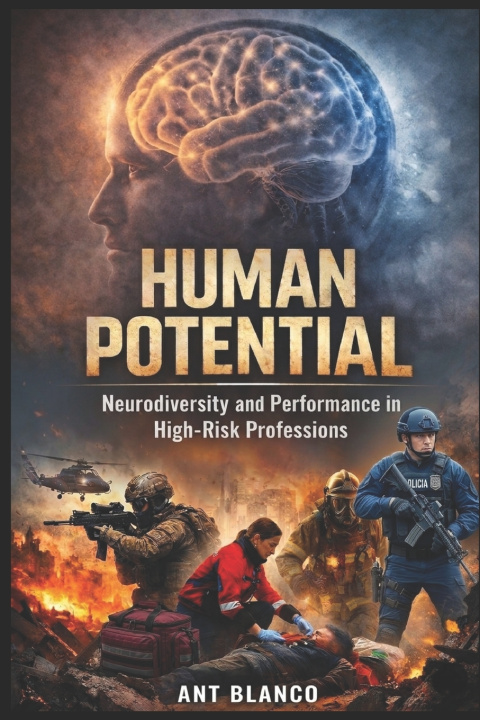
NO LINEAR TEACHING FOR DIVERGENT AND NEURODIVERGENT MINDS.
Many instructors teach techniques, which are combined into tactics, which in turn are integrated into strategies-and only after years of practice can one begin to understand the underlying principles. These principles are universal laws of physics, geometry, and biomechanics that make everything work: from weapons handling to striking, close-quarters combat, and takedowns.
Anyone can teach you targets, techniques, or isolated concepts, but great instructors teach principles. These include leverage, body structure, balance, gravity, action and reaction, space and timing, linear and circular movement, environmental adaptation, direction, fluidity, pivoting, sacrifice, posture, speed, tension, centerline control, and many more. These principles do not change with style or discipline; they are universal and essential for any professional who may face real-world violence.
For years I have trained in martial arts and combat sports. It is a passion that has given me discipline and physical and mental control. But when you face a real aggression, the mind cannot recall hundreds of techniques: you only have the time and capacity to execute one or two instinctive, reactive responses. Hick's Law confirms this-when faced with multiple options, response capability drops dramatically. Under fear and threat, the body prioritizes survival: blood is redirected to the arms and legs, leaving less oxygen for the brain. That is why your response must be instinctive, not memorized.
Cinematic or sport-based training does not reflect operational reality. Choreography is designed to look spectacular, not to neutralize threats quickly. Consider, for example, the Hapkido used by Jackie Chan in his films-visually impressive, but adapted for cinema. By contrast, authentic self-defense Hapkido, as taught in serious academies, focuses on neutralizing aggression efficiently, without embellishment or dramatization.
One of the most difficult aspects to train for professionals is the element of surprise. In competition, you know when and how you will be attacked, opponents are known, and safety rules apply. In real operations, you do not know when or where an encounter will occur, how many aggressors there will be, or what their capabilities are. There are no rules; there is no margin for error and no time to warm up.
This approach is complemented by non-linear learning, which recognizes that tactical and behavioral skills develop irregularly. Real progress occurs when the student experiments, reflects, makes mistakes, and then executes again with intent.
Furthermore, any modern training program must consider the neurodiversity of professionals. Within our ranks are neurotypical and neurodivergent students alike-such as individuals with ADHD, autism, dyslexia, or other cognitive processing differences-whose ways of perceiving, analyzing information, and reacting may vary.
Integrating these perspectives not only improves training quality, but also enhances operational performance, psychological resilience, and safety during interventions-which ultimately is the essence of our mission: to return home and ensure that others do as well.
"Training costs time and energy.
Not training costs lives."


Informace o knize
Angličtina
