
 Kontakt
 Jak nakupovat
Doručení
Nákupní rádce
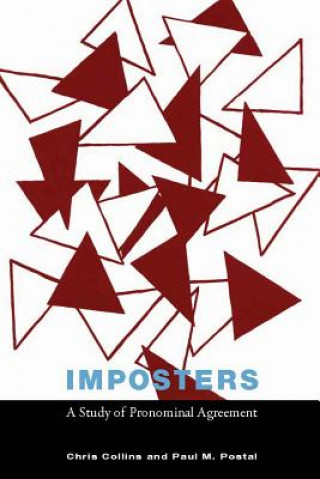
Imposters
A Study of Pronominal Agreement
 Angličtina
 27 b
27 b
Až 30 dní na vrácení zboží
Zákazníci také koupili
















Normally, a speaker uses a first person singular pronoun (in English, I, me, mine, myself) to refer to himself or herself. To refer to a single addressee, a speaker uses second person pronouns (you, yours, yourself). But sometimes third person nonpronominal DPs are used to refer to the speaker--for example, this reporter, yours truly--or to the addressee--my lord, the baroness, Madam (Is Madam not feeling well?). Chris Collins and Paul Postal refer to these DPs as imposters because their third person exterior hides a first or second person core. In this book they study the interactions of imposters with a range of grammatical phenomena, including pronominal agreement, coordinate structures, Principle C phenomena, epithets, fake indexicals, and a property of pronominal agreement they call homogeneity. They conclude that traditional ideas about pronominal features (person, number, gender), which countenance only agreement with an antecedent or the relation of the pronoun to its referent, are much too simple. They sketch elements of a more sophisticated view and argue for its relevance and explanatory power in several data realms. The fundamental proposal of the book is that a pronoun agrees with what they call a source, where its antecedent constitutes only one type of source. They argue that the study of imposters (and closely related camouflage DPs) has far-reaching consequences that are inconsistent with many current theories of anaphora.


Informace o knize
Angličtina

Darujte tuto knihu ještě dnes
Je to snadné
1 Přidejte knihu do košíku a zvolte doručit jako dárek 2 Obratem vám zašleme poukaz 3 Kniha dorazí na adresu obdarovanéhoMohlo by vás také zajímat












 /
/
 Brožovaná
 533
Kč
533
Kč
 /
Pevná
1 250
Kč
/
Pevná
1 250
Kč
Ahoj! Jsem Libroamiko, tvůj knižní rádce.
Jak ti můžu pomoct?