
 Kontakt
 Jak nakupovat
Doručení
Nákupní rádce
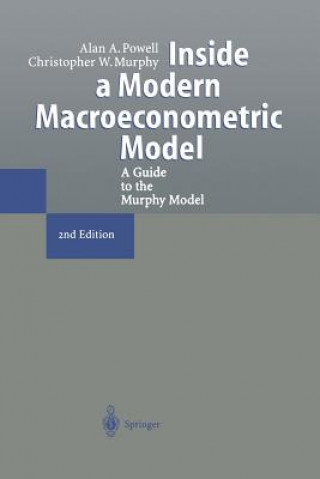
Inside a Modern Macroeconometric Model
A Guide to the Murphy Model
 Angličtina
 353 b
353 b
30 dní na vrácení zboží
Zákazníci také koupili


 /
/
 Brožovaná
 1 014
Kč
1 014
Kč




 /
Brožovaná
350
Kč
/
Brožovaná
350
Kč




As Ken Wallis (1993) has pOinted out, all macroeconomic forecasters and policy analysts use economic models. That is, they have a way of going from assumptions about macroeconomic policy and the international environment, to a prediction of the likely future state of the economy. Some people do this in their heads. Increasingly though, forecasting and policy analysis is based on a formal, explicit model, represented by a set of mathematical equations and solved by computer. This provides a framework for handling, in a consistent and systematic manner, the ever-increasing amounts of relevant information. Macroeconometric modelling though, is an inexact science. A manageable model must focus only on the major driving forces in a complex economy made up of millions of households and fIrms. International economic agencies such as the IMF and OECD, and most treasuries and central banks in western countries, use macroeconometric models in their forecasting and policy analysis. Models are also used for teaching and research in universities, as well as for commercial forecasting in the private sector.


Informace o knize
Angličtina

Darujte tuto knihu ještě dnes
Je to snadné
1 Přidejte knihu do košíku a zvolte doručit jako dárek 2 Obratem vám zašleme poukaz 3 Kniha dorazí na adresu obdarovanéhoMohlo by vás také zajímat







Ahoj! Jsem Libroamiko, tvůj knižní rádce.
Jak ti můžu pomoct?