
 Kontakt
 Jak nakupovat
Doručení
Nákupní rádce
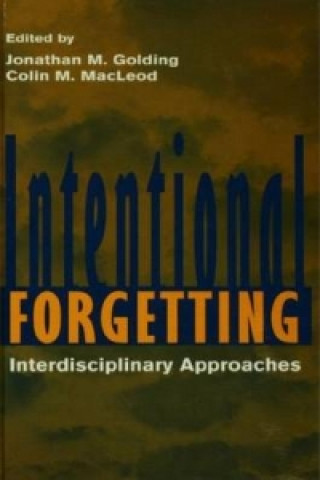
Intentional Forgetting
 Angličtina
 193 b
193 b
30 dní na vrácení zboží
Zákazníci také koupili








 /
/
 Pevná
Pevná
 1 842
Kč
1 842
Kč




 /
Pevná
2 275
Kč
/
Pevná
2 275
Kč

 /
Brožovaná
4 371
Kč
/
Brožovaná
4 371
Kč


Research on intentional forgetting has been conducted in various forms and under various names for at least 30 years, but until now no effort has been made to present these different perspectives in one place. Comprising both review chapters and new empirical studies, this book brings together the many research paradigms investigating intentional forgetting, thereby highlighting the commonalities that link these seemingly disparate areas of research. It serves as a "case study" of one phenomenon in memory--the intention to forget or to modify memory.
Why is research on intentional forgetting important? It helps to increase the understanding of how memory functions, especially with regard to its updating. In William James'' "booming, buzzing confusion," we frequently are unable to adequately process all of the information that we experience; on-line forgetting of some information is necessary. Moreover, we must often replace existing information with new information, as when someone we know relocates and acquires a new address and telephone number. Investigating this updating ability has been the main thrust of research on intentional forgetting, specifically those studies on the directed forgetting phenomenon. Cognitive experiments on directed forgetting have shown that we are able to deal more effectively with large amounts of information by following instructions to treat some of the information as "to be forgotten." In this way, interference is reduced and we are able to devote all of our resources to the remaining to-be-remembered information. The mechanisms that lead to this reduction continue to promote new experiments, but over a quarter century of research maintains that the directed forgetting effect is robust.


Informace o knize
Angličtina

Darujte tuto knihu ještě dnes
Je to snadné
1 Přidejte knihu do košíku a zvolte doručit jako dárek 2 Obratem vám zašleme poukaz 3 Kniha dorazí na adresu obdarovanéhoMohlo by vás také zajímat



 /
Brožovaná
1 358
Kč
/
Brožovaná
1 358
Kč



 /
Brožovaná
488
Kč
/
Brožovaná
488
Kč





Ahoj! Jsem Libroamiko, tvůj knižní rádce.
Jak ti můžu pomoct?