
 Kontakt
 Jak nakupovat
Doručení
Nákupní rádce
 Angličtina
 34 b
34 b
30 dní na vrácení zboží

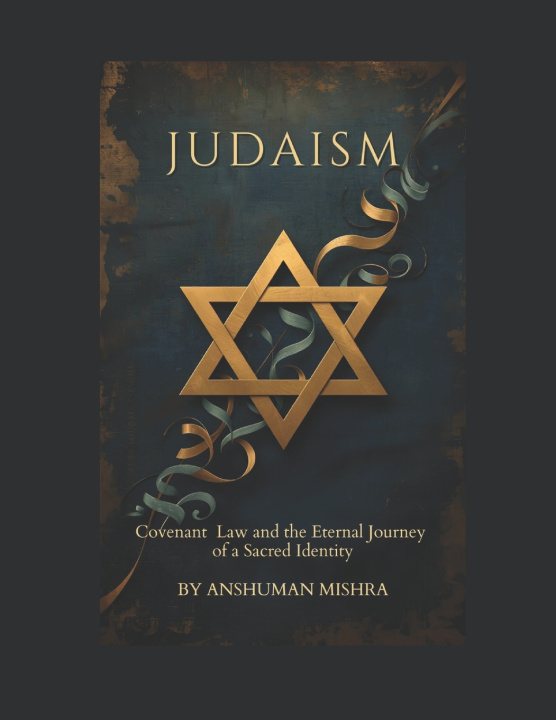
Judaism: Covenant, Law, and the Eternal Journey of a Sacred Identity is a deeply respectful, positive, and academically grounded exploration of one of the world's oldest and most enduring spiritual traditions. Written with cultural sensitivity, intellectual honesty, and spiritual warmth, this book presents Judaism not merely as a system of beliefs, but as a living civilization shaped by faith, ethical law, sacred memory, and a profound sense of responsibility toward life and humanity.
This book has been consciously designed to avoid comparison, criticism, debate, or judgment of any other religion. Its sole purpose is to present Judaism in its own voice and spirit, highlighting its positive history, sacred origins, moral vision, cultural richness, festivals, global presence, and the remarkable continuity of Jewish identity across time and geography. Every chapter has been written with the intention of promoting understanding, respect, and appreciation.
At the heart of Judaism lies the concept of covenant-a sacred relationship grounded in trust, commitment, and moral duty. This book explains how the covenant is not only a theological idea but also a guiding principle for ethical living, community responsibility, and spiritual discipline. Judaism is presented here as a faith that unites belief with action, worship with justice, and spirituality with everyday life.
The book begins by introducing Judaism as a way of life-a tradition where faith is expressed through learning, law, prayer, family values, and service to society. It carefully explains the positive origins of Judaism, emphasizing the formation of a sacred community bound together by shared values, moral responsibility, and devotion to divine teaching. The historical narrative is presented as a story of continuity, resilience, and hope, focusing exclusively on the preservation and transmission of faith and culture.
A significant portion of the book is devoted to the Torah and Jewish law (Halakhah), explaining their role as sources of guidance, ethics, and balance rather than mere rules. Law is portrayed as a compassionate framework that brings structure, meaning, and dignity to life. The emphasis throughout remains on moral values such as justice, kindness, charity, respect for learning, and responsibility toward others.
Special attention is given to Jerusalem, presented as a spiritual center of prayer, hope, and sacred memory. The book discusses sacred geography with reverence, focusing on symbolism, devotion, and spiritual connection rather than political or controversial themes. Jerusalem is described as a place of prayer, learning, and deep spiritual meaning within Jewish tradition.
The chapters on worship and sacred time introduce readers to the beauty of Jewish prayer, the central role of the synagogue, and the profound spiritual significance of Shabbat. Sacred time is shown as a gift-an opportunity for rest, reflection, gratitude, and renewal. These practices are explained in a way that highlights inner peace, discipline, and harmony.
Jewish culture and family life form another important dimension of the book. Education, respect for knowledge, strong family bonds, and intergenerational learning are shown as pillars of Jewish civilization. Language, symbols, music, art, and cultural expressions are discussed as living carriers of identity and values.
The book devotes a full chapter to Jewish festivals, presenting them as joyful, meaningful, and spiritually enriching celebrations. Festivals are explained as moments of gratitude, remembrance, learning, and hope-deeply connected to nature, seasons, and sacred history. Each festival is presented positively, emphasizing joy, community bonding, and ethical reflection.
Another key focus of the book is Jewish ethics and moral philosophy. .


Informace o knize
Angličtina

Darujte tuto knihu ještě dnes
Je to snadné
1 Přidejte knihu do košíku a zvolte doručit jako dárek 2 Obratem vám zašleme poukaz 3 Kniha dorazí na adresu obdarovanéhoAhoj! Jsem Libroamiko, tvůj knižní rádce.
Jak ti můžu pomoct?