
 Kontakt
 Jak nakupovat

Doručení
Nákupní rádce
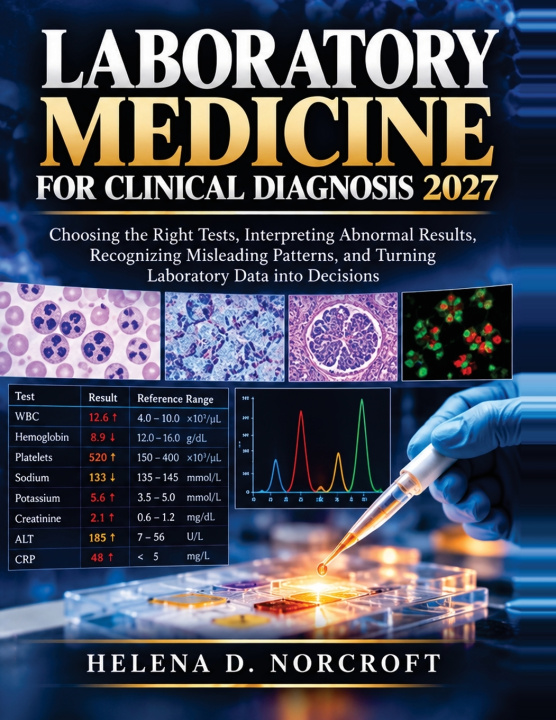
Laboratory Medicine for Clinical Diagnosis 2027
Choosing the Right Tests, Interpreting Abnormal Results, Recognizing Misleading Patterns, and Turning Laboratory Data into Decisions
 Angličtina
 408 b
 Připravujeme
 Nové
Až 30 dní na vrácení zboží

An abnormal laboratory result is a clue-not a conclusion.
A potassium concentration that does not fit the patient's condition. A borderline result that triggers unnecessary concern. Two investigations that appear to contradict one another. Or a seemingly normal finding that fails to explain a persistent clinical problem.
These situations illustrate one of the most important challenges in diagnostic medicine: the difference between obtaining laboratory information and understanding what that information can reliably tell you.
LABORATORY MEDICINE FOR CLINICAL DIAGNOSIS 2027 examines the reasoning involved in selecting investigations, evaluating unexpected findings, recognizing potentially misleading results, and connecting laboratory evidence with clinical decisions.
Rather than treating results as isolated numbers, the book emphasizes their relationship to the clinical question, the reliability of the measurement, and the broader diagnostic picture.
The essential areas explored include:
Selecting investigations with purpose: Understand how the clinical question, suspected disease, and expected usefulness of a test influence appropriate investigation choices.
Interpreting abnormal findings: Examine the distinction between a result outside a reference interval and a finding that meaningfully changes diagnostic understanding.
Recognizing misleading patterns: Consider why unexpected or conflicting results may require closer evaluation before conclusions are drawn.
Evaluating the reliability of results: Explore the importance of specimen-related factors, analytical limitations, and other considerations that may influence interpretation.
Connecting related findings: Develop an approach to assessing laboratory information in context rather than relying on a single abnormal measurement.
Making sense of the next decision: Consider when a result supports the working diagnosis, raises further questions, or warrants additional evaluation.
For clinicians, the most useful laboratory investigation is not necessarily the one that provides the most information. It is the one that helps answer the right clinical question.
This reference is intended for medical students, physicians in training, clinical laboratory professionals, and other healthcare practitioners seeking a more thoughtful understanding of diagnostic testing.
Its focus is the reasoning between the request and the result-and between the result and the clinical decision.
Look beyond the flagged value. Learn to question unexpected findings, weigh the evidence, and understand what the next diagnostic step should accomplish.


Informace o knize
Angličtina

Darujte tuto knihu ještě dnes
Je to snadné
1 Přidejte knihu do košíku a zvolte doručit jako dárek 2 Obratem vám zašleme poukaz 3 Kniha dorazí na adresu obdarovanéhoAhoj! Jsem Libroamiko, tvůj knižní rádce.
Jak ti můžu pomoct?