
 Kontakt
 Jak nakupovat

Doručení
Nákupní rádce
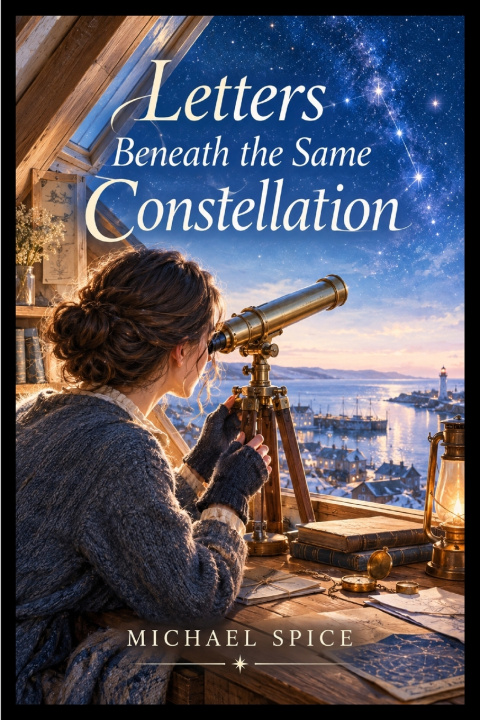
Letters Beneath the Same Constellation
 Angličtina
 41 b
 Připravujeme
 Nové
Až 30 dní na vrácení zboží

Lena Crawford, a meticulous manuscript conservator in the coastal town of Oakhaven, has spent three years separated from Arthur Bennett, the architectural draftsman she loves. They have made their distance bearable through a strict ritual: every night at eleven, they look at the constellation Cygnus from their separate homes, knowing they are observing the same stars at the same moment. Their letters, carefully written and preserved, record their work and their promise to reunite at the winter solstice. Lena treats this arrangement almost like a structural calculation: a reliable system built on discipline, mutual sacrifice, and faith that each will keep their word.Her professional future becomes complicated when she is offered a prestigious conservation fellowship in Vienna. It would place her among Europe's most important historic manuscripts and could transform her career, but accepting it would mean postponing the reunion she and Arthur have planned. Lena refuses to abandon their agreement simply because a new opportunity has appeared. Her mentor, Darren Holt, warns that she is organizing her life around letters and an idealized promise rather than the realities of human relationships. Lena remains certain that their separation has a defined end and that both have earned the right to begin their shared life as equals.But the correspondence begins to reveal cracks. The letters arriving from Arthur continue to describe his drafting work and his anticipation of the solstice, yet their physical details and later discoveries do not match the truth. When Lena travels to St. Jude's Harbor to find him, Arthur's former employer tells her that he has not been at the office for ten months. Lena discovers that Arthur had developed a rapidly progressive motor-neuron illness that robbed him of the ability to draw, write, swallow, and eventually breathe. Rather than allow her to abandon her own future to care for him, he concealed his condition and withdrew from their life together. His sister Alice helped him survive in increasingly desperate circumstances, and some of the letters Lena received were produced under painful, compromised conditions to maintain the illusion that he was well.The revelation devastates Lena. She has to confront not only Arthur's death, but also the way fear, secrecy, and the desire to protect someone can destroy the very trust they are meant to preserve. In the aftermath, she learns that a final letter written in Arthur's own hand was delayed in the postal system for more than seven months. It explains his diagnosis, his terror of becoming an object of pity, and his desperate wish that Lena continue to pursue the life she had worked so hard to build. The letter arrives too late to change what happened, but it gives her a clearer understanding of his choices and releases her from the belief that he simply abandoned her.The ending is deliberately tragic rather than conventionally reassuring. Lena grieves at Arthur's grave, tears apart the accusatory letter she had prepared, and returns to Oakhaven carrying the knowledge that the reunion they planned will never take place. She rejects the Vienna fellowship and returns to the attic where she kept watch over Cygnus. At the very end, she cannot bring herself to write a reply to Arthur; she places a single drop of ink on a blank page, caps her pen, and looks again at the constellation. The stars remain beautiful but indifferent. Lena's nightly vigil continues, no longer a promise of a future meeting, but a solitary ritual of memory and enduring love. The novel explores devotion, the limits of sacrifice, the damage caused by secrecy, and the painful difference between loving someone and deciding what is best for them.


Informace o knize
Angličtina

Darujte tuto knihu ještě dnes
Je to snadné
1 Přidejte knihu do košíku a zvolte doručit jako dárek 2 Obratem vám zašleme poukaz 3 Kniha dorazí na adresu obdarovanéhoAhoj! Jsem Libroamiko, tvůj knižní rádce.
Jak ti můžu pomoct?