
 Kontakt
 Jak nakupovat
Doručení
Nákupní rádce
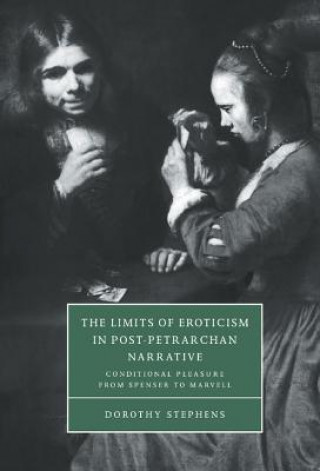
Limits of Eroticism in Post-Petrarchan Narrative
Conditional Pleasure from Spenser to Marvell
 Angličtina
 292 b
292 b
Až 30 dní na vrácení zboží
Zákazníci také koupili

 /
/
 Adobe ePub DRM
 27
Kč
27
Kč







 /
/
 Brožovaná
732
Kč
Brožovaná
732
Kč

Although theories of exploitation and subversion have radically changed our understanding of gender in Renaissance literature, to favour only those theories is to risk ignoring productive exchanges between 'masculine' and 'feminine' in Renaissance culture. 'Appropriation' is too simple a term to describe these exchanges - as when Petrarchan lovers flirt dangerously with potentially destructive femininity. Spenser revises this Petrarchan phenomenon, constructing flirtations whose participants are figures of speech, readers or narrative voices. His plots allow such exchanges to occur only through conditional speech, but this very conditionality powerfully shapes his work. Seventeenth-century works - including a comedy by Jane Cavendish and Elizabeth Brackley, and Upon Appleton House by Andrew Marvell - suggest that the civil war and the upsurge of female writers necessitated a reformulation of conditional erotics.


Informace o knize
Angličtina
Kategorie

Darujte tuto knihu ještě dnes
Je to snadné
1 Přidejte knihu do košíku a zvolte doručit jako dárek 2 Obratem vám zašleme poukaz 3 Kniha dorazí na adresu obdarovanéhoMohlo by vás také zajímat

 /
Pevná
608
Kč
/
Pevná
608
Kč



 /
Brožovaná
444
Kč
/
Brožovaná
444
Kč

 /
Brožovaná
339
Kč
/
Brožovaná
339
Kč




Ahoj! Jsem Libroamiko, tvůj knižní rádce.
Jak ti můžu pomoct?