
 Kontakt
 Jak nakupovat
Doručení
Nákupní rádce
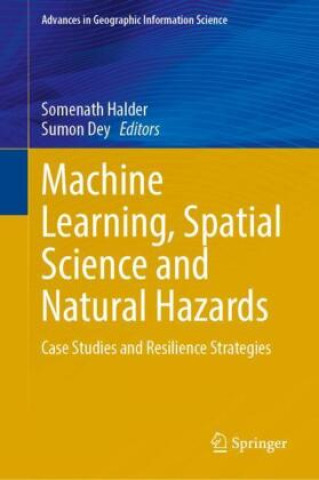
Machine Learning, Spatial Science and Natural Hazards
Case Studies and Resilience Strategies.DE
 Angličtina
 552 b
552 b
 Připravujeme
 Nové
Nové
 Vydání 10. 11. 2026
Až 30 dní na vrácení zboží
Mohlo by vás také zajímat



 /
/
 Pevná
Pevná
 2 674
Kč
2 674
Kč

This contributed volume examines how machine learning (ML) and artificial intelligence (AI) are being used in hazard science, environmental management, and related policy studies. It brings together work that combines model-based outputs with ground-level data to study risk, monitoring, and decision-making across disciplines. The chapters here address natural hazard management, including fluvial and landslide processes, vegetation erosion dynamics, air quality, forest fires, and coastal hazards. Watershed assessment, flood and erosion zonation, and approaches to regional and global monitoring using advanced datasets and models are also covered. Furthermore, the book explores links between environmental change, resource use, and social inequality, with attention to applications at multiple spatial scales.
Contributions draw on remote sensing, GIS, and statistical analysis to quantify environmental processes and assess policy responses. Case studies illustrate how these tools are applied in different contexts, alongside discussions of data integration and methodological design. The volume includes both theoretical and empirical work, offering perspectives on how ML- and AI-based approaches can be incorporated into research and practice.


Informace o knize
Angličtina

Darujte tuto knihu ještě dnes
Je to snadné
1 Přidejte knihu do košíku a zvolte doručit jako dárek 2 Obratem vám zašleme poukaz 3 Kniha dorazí na adresu obdarovanéhoAhoj! Jsem Libroamiko, tvůj knižní rádce.
Jak ti můžu pomoct?