
 Kontakt
 Jak nakupovat
Doručení
Nákupní rádce
 Angličtina
 58 b
58 b
Až 30 dní na vrácení zboží

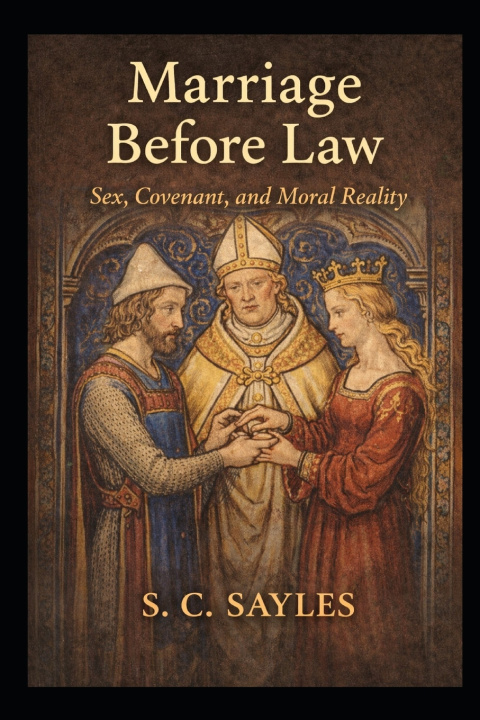
Marriage Before Law: Sex, Covenant, and Moral Reality
by S. C. Sayles
What is marriage-really?
Modern discussions almost invariably begin with regulation: legal definitions, cultural norms, emotional fulfilment, or institutional policy. Marriage Before Law begins somewhere far older and more demanding. It begins with ontology.
In this work, S. C. Sayles argues that marriage is not created by law, ceremony, or sentiment, but is a moral reality grounded in creation itself. Before marriage is recognised by church or state, it already exists as a one-flesh union formed through sexual embodiment and charged with covenantal consequence. Law does not create this reality; it responds to it-often imperfectly.
Drawing on Scripture, historical theology, and careful moral reasoning, Sayles challenges the modern separation of sex from obligation and marriage from substance. He demonstrates that Scripture consistently treats sexual union as constitutive rather than expressive: it forms bonds, generates responsibility, and creates moral claims whether honoured or violated. From Genesis to the Gospels, from Mosaic law to Pauline teaching, marriage is presented not as an administrative category but as a creational fact that asserts itself even under injustice, disorder, or denial.
The book addresses difficult and often avoided questions with clarity and seriousness:
- What does it mean to be "one flesh"?
- Does sexual union create real obligation outside legal marriage?
- How should divorce be understood when covenant has been destroyed in substance?
- What authority does the state have-and not have-over marriage?
- Why have modern legal and ecclesial systems become increasingly incoherent on sexual ethics?
Marriage Before Law does not offer policy prescriptions or sentimental reassurance. It offers a framework-rooted in Scripture and moral reality-by which marriage, sex, divorce, and responsibility can be understood without evasion. It insists that repentance does not deny reality, that recognition is not moral endorsement, and that truth cannot be preserved by abstraction.
Written with doctrinal clarity and pastoral sobriety, this book is for readers willing to think carefully about marriage as it actually exists, not merely as it is regulated or imagined. It is a work for theologians, pastors, students of Scripture, and thoughtful readers concerned with truth rather than convenience.
Marriage stands before law.
This book explains why.


Informace o knize
Angličtina

Darujte tuto knihu ještě dnes
Je to snadné
1 Přidejte knihu do košíku a zvolte doručit jako dárek 2 Obratem vám zašleme poukaz 3 Kniha dorazí na adresu obdarovanéhoAhoj! Jsem Libroamiko, tvůj knižní rádce.
Jak ti můžu pomoct?