
 Kontakt
 Jak nakupovat
Doručení
Nákupní rádce
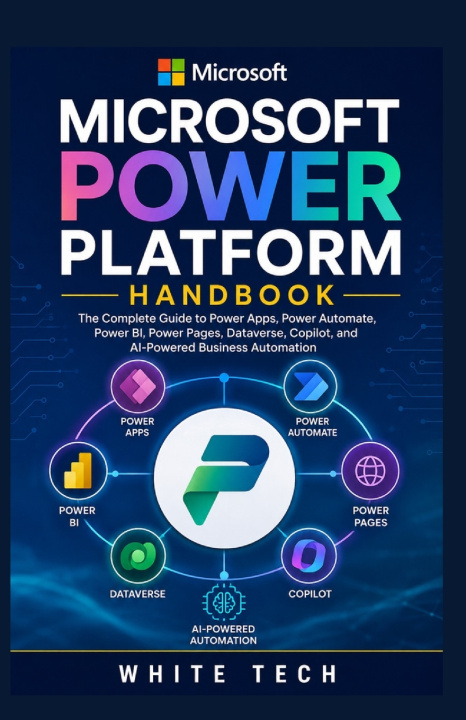
Microsoft Power Platform Handbook
The Complete Guide to Power Apps, Power Automate, Power BI, Power Pages, Dataverse, Copilot, and AI-Powered Business Automation
 Angličtina
 41 b
41 b
 Připravujeme
 Nové
Nové
Až 30 dní na vrácení zboží

Business technology is rapidly moving toward a world where organizations can build applications, automate repetitive processes, analyze data, and create intelligent digital experiences without relying entirely on traditional software development.
Microsoft Power Platform Handbook provides a practical and comprehensive introduction to Microsoft's Power Platform ecosystem, helping readers understand how its major technologies work individually and, more importantly, how they can work together to create connected business solutions.
Whether you are a beginner exploring low-code development, a business professional looking to automate repetitive tasks, an aspiring Power Platform developer, or an experienced technology professional expanding your skills, this handbook provides a structured path from fundamental concepts to practical solution development.
Inside this book, you will explore:
- Power Apps and how to build customized business applications using canvas and model-driven approaches.
- Power Automate for creating automated workflows, approvals, notifications, integrations, and business processes.
- Power BI for transforming business data into interactive reports, dashboards, and actionable insights.
- Power Pages for creating modern external-facing websites and business portals.
- Microsoft Dataverse for designing structured data models, relationships, security, and reliable business data foundations.
- Copilot and AI capabilities for AI-assisted development, automation, data interaction, and intelligent business solutions.
- Connectors and APIs for integrating Power Platform with Microsoft 365, databases, and external services.
- Environments, solutions, governance, and ALM for managing Power Platform applications throughout their development and deployment lifecycle.
- Security and access control for protecting business applications and organizational data.
- Real-world automation strategies for turning repetitive manual processes into efficient digital workflows.
Rather than focusing only on individual features, this book emphasizes how the different components of Power Platform fit together. You will learn how an application can collect information through Power Apps, store it in Dataverse, process it through Power Automate, analyze it with Power BI, and extend selected experiences through Power Pages.
You will also gain a stronger understanding of the principles behind successful Power Platform development, including data modeling, application design, workflow logic, integration, validation, security, governance, testing, and maintainability.
Microsoft Power Platform Handbook is designed to help you move beyond simply using individual Microsoft tools. It provides the foundation for thinking like a Power Platform builder-someone who can identify a business problem, select the appropriate technology, design a solution, and connect multiple services into a practical digital system.
If you want to understand how Microsoft's low-code ecosystem can support application development, workflow automation, business intelligence, data management, and AI-powered transformation, this handbook provides a comprehensive foundation for your journey.


Informace o knize
Angličtina

Darujte tuto knihu ještě dnes
Je to snadné
1 Přidejte knihu do košíku a zvolte doručit jako dárek 2 Obratem vám zašleme poukaz 3 Kniha dorazí na adresu obdarovanéhoAhoj! Jsem Libroamiko, tvůj knižní rádce.
Jak ti můžu pomoct?