
 Kontakt
 Jak nakupovat
Doručení
Nákupní rádce
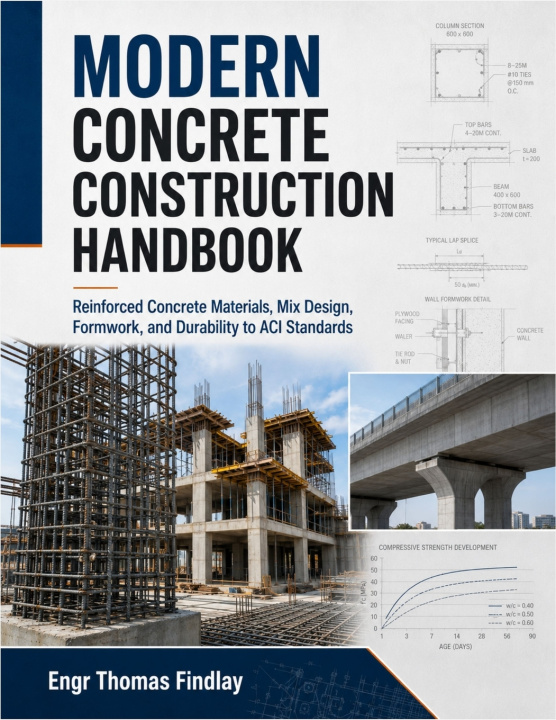
Modern Concrete Construction Handbook
Reinforced Concrete Materials, Mix Design, Formwork, and Durability to ACI Standards
 Angličtina
 290 b
290 b
 Připravujeme
 Nové
Nové
Až 30 dní na vrácení zboží

More concrete is placed each year than any other building material, yet the same specified strength can produce a structure that serves for a century or one that begins to spall within a decade. The difference is decided not by the number on the drawing but by dozens of choices made between the specification and the finished pour.
For many engineers and site professionals, the knowledge to make those choices well arrives in fragments - clean theory in the classroom, disconnected rules of thumb in the field, and the two rarely joined. Modern practice widens the gap, because today's concrete relies on supplementary materials, chemical admixtures, and performance-based specifications that older references barely address.
This handbook brings the subject together. It treats concrete as a system that is proportioned, produced, placed, consolidated, finished, cured, and then made to perform in a real environment, developing every idea from first principles and carrying it through to something you can use - a calculation you can perform, a mixture you can proportion, a member you can detail, and a deterioration mechanism you can prevent.
Inside, you will:
● Follow concrete through its full life, from binder chemistry to the behavior of a finished structural member;
● Proportion a mixture by the absolute-volume method, from required average strength to batch weights, and refine it by trial batch;
● Select and combine cements, supplementary materials, admixtures, and aggregates for strength, workability, and economy;
● Detail reinforcement, design formwork and falsework, and control placement, consolidation, finishing, and curing;
● Design for durability and a required service life against corrosion, freeze-thaw, sulfate attack, and alkali-aggregate reaction;
● Apply quality control, field and laboratory testing, and acceptance, and extend the material through high-performance and special concretes, repair, and sustainable practice.
Key topics include cement and hydraulic binders, supplementary cementitious materials and admixtures, aggregates, fresh-concrete workability and early-age behavior, mixture proportioning, hardened strength and mechanical properties, reinforcement and bond, temporary works, production and placement, finishing and weather-specific concreting, the structural behavior of reinforced concrete, durability and service-life design, and quality assurance - each supported by worked examples, practice problems, and dual United States customary and metric units.
The book is written for practicing civil, structural, materials, and construction engineers; superintendents, inspectors, and technicians who want the reasoning behind the rules; and advanced students preparing to practice under United States design and material standards.
Take up a reference that follows concrete from the chemistry of its binder to the performance of the finished structure, and build the judgment a specified strength alone can never capture. Add this handbook to your working library and begin.


Informace o knize
Angličtina

Darujte tuto knihu ještě dnes
Je to snadné
1 Přidejte knihu do košíku a zvolte doručit jako dárek 2 Obratem vám zašleme poukaz 3 Kniha dorazí na adresu obdarovanéhoAhoj! Jsem Libroamiko, tvůj knižní rádce.
Jak ti můžu pomoct?