
 Kontakt
 Jak nakupovat
Doručení
Nákupní rádce
 Angličtina
 48 b
48 b
 Nové
Nové
Až 30 dní na vrácení zboží

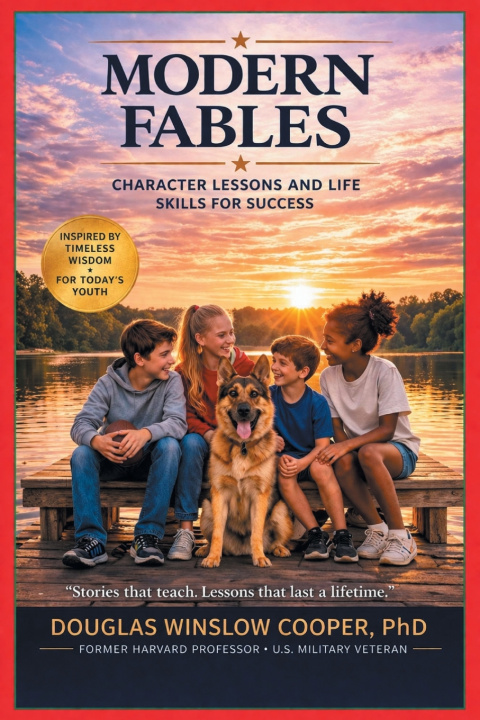
MODERN FABLES: Character Lessons and Life Skills for Success
Why do we emphasize character?
Benjamin Franklin understood that character is essential to civic life: "Nothing is more important for the public wealth than to form and train youth in wisdom and virtue. Only a virtuous people are capable of freedom."
But what is character?
Abraham Lincoln offered a memorable distinction: "Character is like a tree and reputation like a shadow. The shadow is what we think of it; the tree is the real thing."
The test of that reality comes in our treatment of the powerless. Abigail van Buren wrote, "The best index to a person's character is how he treats people who can't do him any good, and how he treats people who can't fight back."
Sustaining such integrity requires what Maya Angelou identified as the foundational virtue: "Courage is the most important of all the virtues because without courage, you can't practice any other virtue consistently."
What is the role of fables?
A fable is a brief narrative designed to teach a moral lesson. Unlike other forms of storytelling, fables are explicitly instructional-each story illuminates a clear principle about how to live well. The best fables make wisdom memorable by embedding it in concrete situations we can picture and understand.
Why do stories work so well as teaching tools?
First, stories engage our emotions and imagination in ways that abstract principles cannot. Second, stories provide context. Third, stories are memorable. Fourth, and perhaps most important, stories build moral imagination.
The stories you'll read here continue this ancient tradition in a modern American setting. Most are drawn from real experiences, with names and details modified to preserve privacy, and they show the same timeless virtues Aesop taught.


Informace o knize
Angličtina
Kategorie

Darujte tuto knihu ještě dnes
Je to snadné
1 Přidejte knihu do košíku a zvolte doručit jako dárek 2 Obratem vám zašleme poukaz 3 Kniha dorazí na adresu obdarovanéhoAhoj! Jsem Libroamiko, tvůj knižní rádce.
Jak ti můžu pomoct?