
 Kontakt
 Jak nakupovat

Doručení
Nákupní rádce
 Angličtina
 124 b
 Nové
Až 30 dní na vrácení zboží

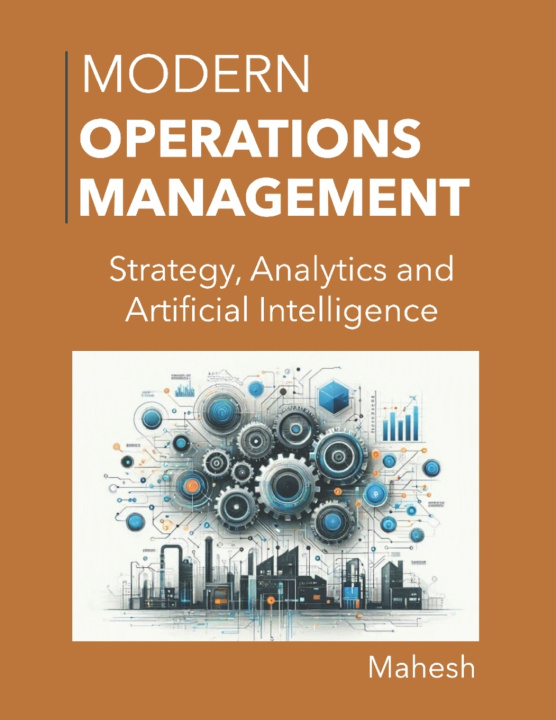
Why This Book
Every organisation is an operation. Hospitals treat patients, airlines move passengers, banks process transactions, factories make products, governments deliver services and digital platforms match millions of customers with providers every day. How well these operations are designed and run determines the quality, cost, speed and reliability of what people receive, and increasingly their environmental and social impact.
Operations management is changing faster than at any time since the rise of lean production. Artificial intelligence now forecasts demand, predicts machine failures, inspects products and schedules work. Generative AI assistants answer technicians' questions and draft plans; AI agents begin to act on their own within defined limits. Digital twins allow managers to test changes before making them. At the same time, organisations face pressure to decarbonise, to become more resilient after a series of disruptions, and to create safe, fair and meaningful work.
Many textbooks treat these developments as additions to a traditional curriculum. This book takes a different approach. It presents the enduring foundations of operations management, process analysis, capacity, quality, inventory, planning and scheduling, and integrates analytics, AI, sustainability and resilience throughout, so that students learn to apply classic principles with modern tools.
Who This Book Is For
The book is written for undergraduate and postgraduate students of business, management and engineering taking courses in operations management, production and operations management, service operations or operations analytics. It is also suitable for MBA and executive programmes and for practitioners who want a structured, up-to-date overview of the field. No previous knowledge of operations is assumed; basic algebra and introductory statistics are sufficient for the quantitative material, and Appendix B introduces Excel Solver and Python.
Distinctive Features
- Analytics and AI integrated throughout. Every chapter shows how data, models and AI improve decisions, and Part V provides dedicated chapters on optimisation, simulation and digital twins, machine learning, and generative and agentic AI.
- Verified quantitative examples. All worked examples, figures and answers were calculated and checked in code. The Analytics Toolkits in Excel and Python reproduce the results in the book exactly.
- Manufacturing and services together. Examples cover hospitals, airlines, banks, hotels, call centres, government services and digital platforms as well as factories and process plants.
- A regional perspective. While the book is international in scope, many examples and cases reflect operations in the Gulf and the wider Middle East, including aviation hubs, desalination and power plants, mega-events, Ramadan demand patterns, heat stress and workforce nationalisation.
- Sustainability, resilience and ethics. Sustainability Spotlights in every chapter, and dedicated chapters on sustainable operations, risk and resilience, connect operations decisions to climate, resource use, human rights and responsible AI.
- People at the centre. Work design, ergonomics, human-AI collaboration and workforce transitions are treated as core operations topics, not afterthoughts.


Informace o knize
Angličtina

Darujte tuto knihu ještě dnes
Je to snadné
1 Přidejte knihu do košíku a zvolte doručit jako dárek 2 Obratem vám zašleme poukaz 3 Kniha dorazí na adresu obdarovanéhoAhoj! Jsem Libroamiko, tvůj knižní rádce.
Jak ti můžu pomoct?